What To Do With A Vitamix Blender: 12 Everyday Uses
A Vitamix blender handles far more than smoothies — it makes hot soup from cold ingredients, grinds grain into flour, crushes ice in seconds, and blends nut butter thick enough to spread. The catch is that it’s a high-speed machine: what you put in, how much, and how long you run it all change the result. Run it wrong and you’ll get heat, grit, or a stalled motor instead of the texture you wanted.
What a Vitamix blender can actually do
- It makes hot soup without a stove — 5 to 6 minutes on High brings cold ingredients to steaming, because friction from the blades does the heating.
- It turns 2 cups of raw nuts into smooth butter in 1 to 2 minutes, but only if the container is at least half full and you scrape down the sides once.
- It grinds 1 cup of dry rice or oats into flour in about 1 minute on the dry container, not the wet one.
- Frozen fruit blends into soft-serve texture with 4 to 6 ounces of liquid per 2 cups of frozen fruit — less liquid and the blades just spin air.
- It crushes 2 cups of ice into snow in 10 to 15 seconds on High, no liquid needed.
- Dough, thick batters, and anything over 4 cups total need the tamper, not more speed.
The nut butter is where most people give up. A full container of nuts won’t circulate — the blades carve a tunnel and the rest sits still. Start with 2 cups, run 30 seconds, scrape, and repeat. The butter goes from gritty to glossy in the last 20 seconds, so stop one cycle early if you want it chunky.
Ice is the opposite case. Small loads work better than large ones, and 2 cups is the ceiling for snow texture. Load 4 cups and you get crushed ice with whole cubes left at the top.
The dry container earns its shelf space only if you grind flour weekly. For occasional use, 1 cup of oats in the wet container gives a coarser meal that bakes fine in pancakes and muffins.
Why it behaves differently from a normal blender
A Vitamix runs a 1,400 to 2,200-watt motor, depending on the model, and that power is the whole story. A standard kitchen blender spins around 300 to 500 watts. The extra power doesn’t just blend faster — it creates friction heat that can cook food while it’s still moving.
That’s why cold soup turns hot in minutes, and why the same machine can overheat a thick nut butter if you don’t give it breaks. The motor also drives the blades fast enough to break down cellulose in plant fibers. You’ll feel the difference in texture — kale smoothies come out smooth, not leafy.
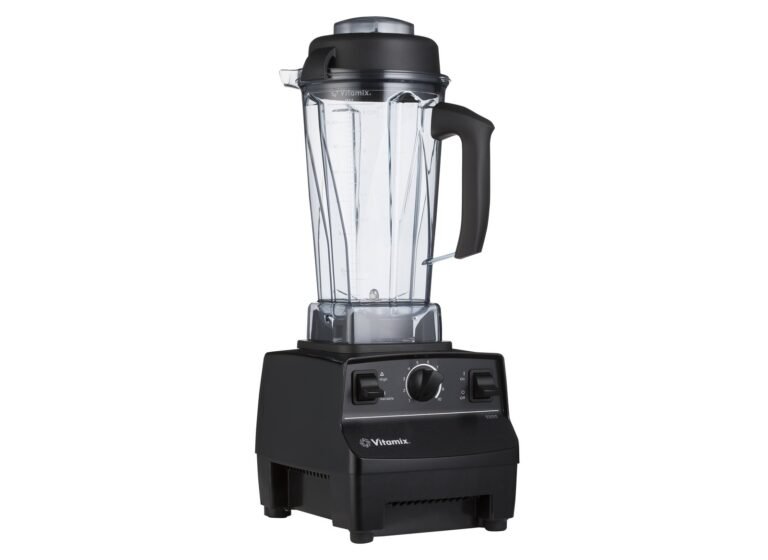
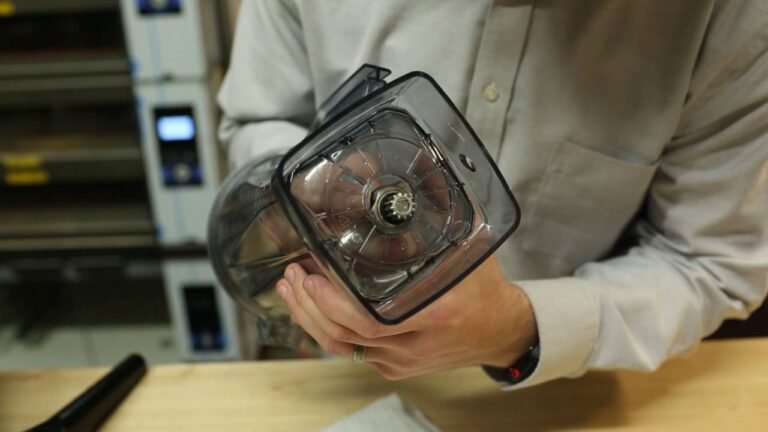
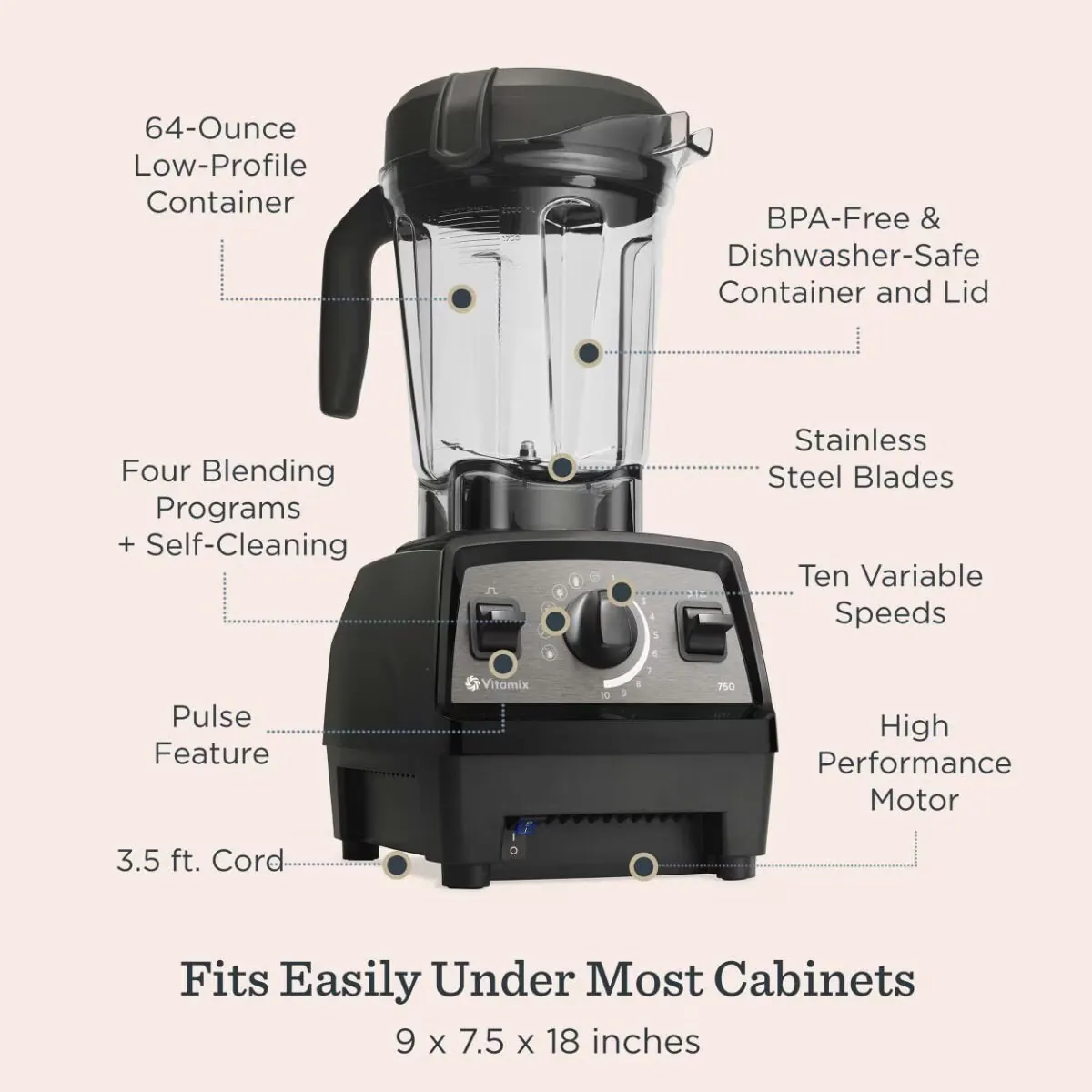
The container shape matters too. Vitamix uses a tall, narrow jar with a tamper that fits through the lid. The container’s shape helps keep ingredients moving into the blades, which is why you rarely need to stop and stir. A wide, short jar circulates ingredients differently, so food can sit on the sides.
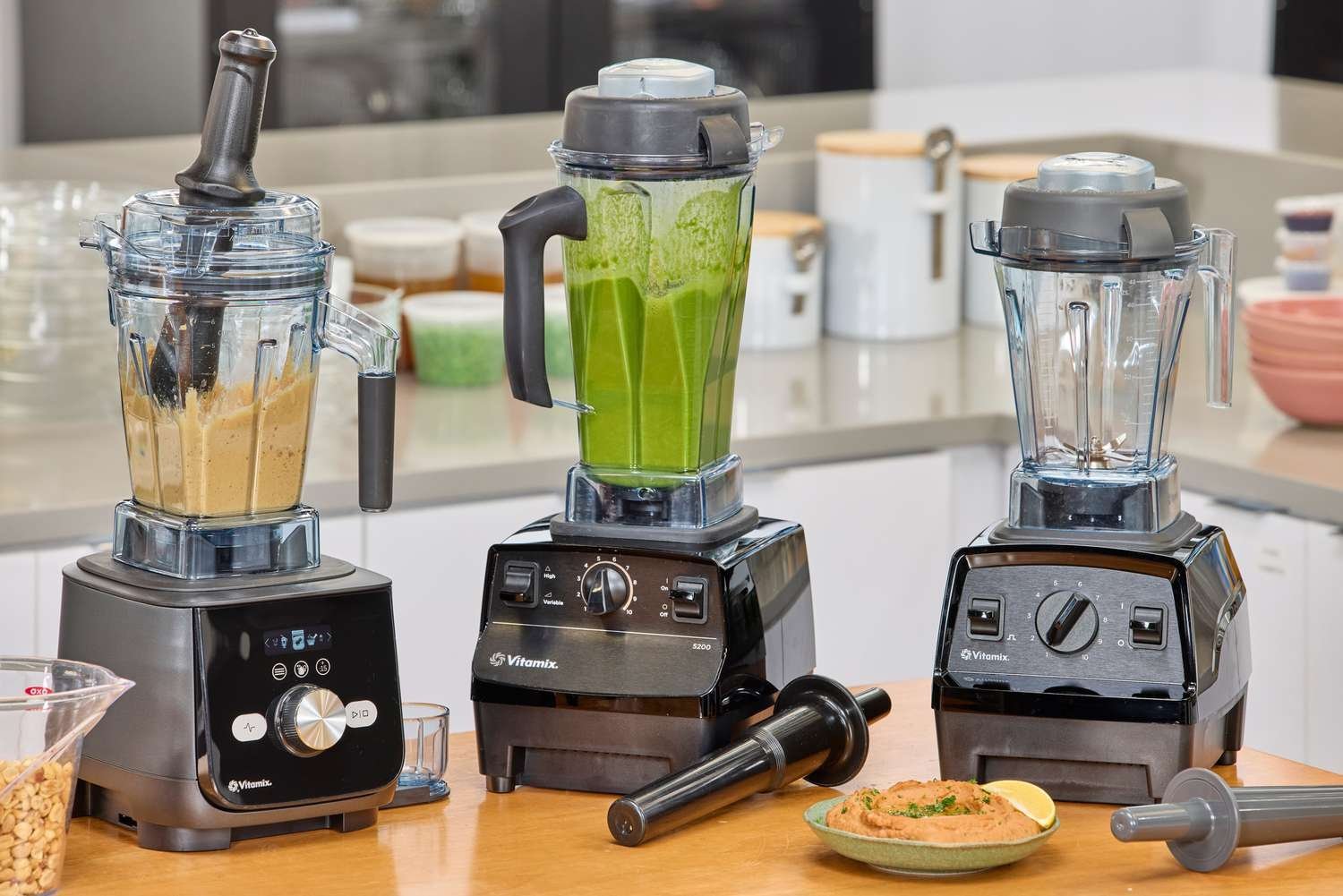
Your model’s exact wattage is printed on the base or in the manual. Check there before you assume a time — a 1,400-watt Explorian and a 2,200-watt Ascent don’t reach the same temperature on the same setting.
Every result here assumes a container filled between one-third and two-thirds full. Below that, blades spin without grabbing. Above it, the motor strains. Your own jar has a fill line — read it, and work to that.
When a Vitamix isn’t the right tool
The machine is built for wet and dry blending, not for everything in the kitchen. Here’s where the simple answer changes.
| Situation | What changes | What to do instead |
|---|---|---|
| You want to chop onions | Blades liquefy, not dice | Use a knife or food processor |
| You’re making 1 small smoothie | Too little to reach blades | Add more, or use a smaller container |
| You need stiff bread dough | Motor strains, dough climbs | Use a stand mixer with a dough hook |
| You’re grinding coffee daily | Oils clog the dry container | Use a burr grinder |
| You want whipped cream | Over-aerates fast, turns to butter | Use a hand or stand mixer |
| Your jar is cracked | Pressure can shatter it | Stop and replace the container |
If your recipe is mostly liquid and you want smooth, this machine wins. If it’s mostly dry and you want pieces, it loses — every time.
How to use it properly, step by step
- Add liquid first, then soft items, then hard items, then ice on top. This order lets the blades pull food down instead of pushing it up. For a smoothie, that’s 1 cup liquid, then fruit, then ice.
- Fill the container to between one-third and two-thirds full. Under-filled jars spin air; over-filled jars stall. Check the fill line molded on your jar, not a guess.
- Lock the lid and insert the tamper through the lid plug. The tamper only fits when the lid is on — that’s a safety design, not a suggestion. Never push the tamper past the marked line.
- Start on Variable 1, then move to 10 within 5 to 10 seconds. Starting high throws ingredients up the sides before they break down. Ramp up as the mixture starts moving.
- Flip to High and run 30 to 60 seconds for smoothies, 5 to 6 minutes for hot soup. Soup is done when you see steam rising and the lid feels warm — that’s your check, not the clock. For nut butter, run 1 minute, stop, scrape, run 1 more minute.
- Use the tamper while it runs, not your hand. Push ingredients toward the blades from the corners. Never put a spoon or spatula in a running container — it can hit the blades and break the jar.
- Stop and scrape down once for thick mixtures. Nut butter, hummus, and frozen desserts need one pause. Run no more than 1 minute before checking, so the motor doesn’t overheat.
- Turn off, unplug, then clean. Fill halfway with warm water and 1 drop of dish soap, run 30 seconds on High, rinse. For sticky residue, repeat with 1 cup water and 1 cup white vinegar.
Mistakes that ruin the result
Adding all the liquid at once for thick blends. Nut butter and hummus turn soupy. Start with half the liquid, then add the rest in small amounts until it moves. If you have already poured it all in, add more of the solid — a spoonful of nuts, a few chickpeas — rather than more liquid.
Running thick mixtures for minutes without stopping. The motor overheats and shuts down, and you’ll wait 20 to 45 minutes for it to cool before it restarts. Run thick mixes in bursts of 30 to 60 seconds and give the machine a minute between them. If it does shut down, unplug it and wait the full time; restarting early only trips it again.
Filling past the max line to “save a batch.” Ingredients back up into the lid and leak, and the blades can’t circulate — you get chunks, not smooth. Split it into two batches instead. A second run costs you a minute; an overflow costs you the batch and the cleanup.
Using the wet container for dry grain. The wet container’s blades aren’t shaped for dry grinding and wear faster. Use the dry container, which has different blade geometry for grinding. Grinding a small amount of spice once won’t kill the machine, but making your own flour weekly in the wet jar will.
Blending hot liquids with the lid sealed tight. Steam builds pressure and can push the lid off. Remove the lid plug and vent, or let the food cool first. Fill the jar no more than halfway with hot soup, and hold a folded towel over the opening.
Frequently asked questions
Can a Vitamix blend hot liquids?
Yes, but vent it. The container and lid handle heat fine, but a sealed lid traps steam, and pressure can lift it off mid-blend. Remove the lid plug and hold a towel loosely over the opening, or start with cold ingredients and let the machine’s friction heat them. Never fill a hot container more than halfway.
Why does my Vitamix stop in the middle of blending?
It’s the thermal protection cutting in. Thick mixtures like nut butter or frozen desserts pull heavy load, and the motor shuts off before it damages itself. Unplug it, let it cool 20 to 45 minutes, then restart with a thinner mixture or smaller batches. If it stops within seconds on a thin smoothie, the issue is the recipe, not the machine.
How long does it take to make flour in a Vitamix?
About 1 minute for 1 cup of dry rice or oats in the dry container, on High. Stop at 30 seconds to shake the container, then run 30 seconds more. You’re done when the powder feels fine between your fingers and no grit remains. Larger batches take longer — 2 cups needs about 2 minutes with a shake halfway.
Is it safe to put a spoon in a running Vitamix?
No. A spoon, spatula, or any tool other than the tamper can hit the blades and break the container or send pieces out. Only the tamper goes in, only through the lid plug hole, and only while the lid is locked. If you need to scrape, stop the machine and unplug it first.
What happens if I blend ice without liquid?
You get snow, not a smoothie — and that’s fine for 2 cups of ice in 10 to 15 seconds. But for frozen fruit, you need 4 to 6 ounces of liquid per 2 cups or the blades just spin air and the motor heats up. If the mixture stops moving, stop the machine and add liquid rather than running it longer.
Does it matter which container I use?
Yes, a lot. The wet container is for smoothies, soups, and sauces. The dry container has different blades designed for grinding grain and coffee. Using the wet container for dry grinding dulls the blades and wears the container over time. If you only own one, blend wet foods and buy grain pre-ground.
Can I make nut butter in a Vitamix?
Yes, in 1 to 2 minutes, but only with the right load. Use at least 2 cups of raw or roasted nuts and a container at least half full. Run 1 minute, stop, scrape the sides, then run 1 more minute. Add 1 to 2 teaspoons of oil only if it stays crumbly after 2 minutes. Almonds take longer than cashews.
How often should I clean it?
After every use. A 30-second rinse blend with warm water and 1 drop of soap handles most jobs, and it takes less time than hand-washing. For nut butter or strong flavors, repeat with 1 cup water and 1 cup white vinegar. Let the container air-dry upside down so water doesn’t sit in the base.
Conclusion
The machine rewards you for respecting its limits — the fill line, the ramp-up, the short runs for thick mixtures. Get those three right and it’ll do things a normal blender simply can’t. Push past them and you’ll spend more time waiting for a cool-down than blending.