How to Use an Oster 14 Speed Blender: Step by Step
To use an Oster 14 speed blender, set the jar on the base, lock the lid, plug it in, and press the speed button you need — then start on a low speed and move up. Most blends finish in 30 to 60 seconds. Hard jobs like ice or frozen fruit need pulse bursts, not one long run.
The 14-speed dial and the 14-speed touch pad don’t work the same way. This page covers both.
Who should read this page
People who just unboxed a 14-speed Oster and want to make a smoothie tonight. You have the blender, the jar, and the manual somewhere in the box. What you need is the order of operations and the speed for each job — not a history of the brand.
People who own the blender but only ever press one button. You’ve had it a while, you make the same shake, and the other speeds sit unused. What you need is a short map of what each speed band does and when to leave the low ones alone.
People deciding whether to buy one. You want to know if 14 speeds is real control or a marketing number. This page isn’t for you — read the specs on Oster’s own product page and compare wattage, because that’s what actually crushes ice.
This page assumes your blender is assembled, plugged into a working outlet, and not damaged. If the blade is bent or the jar is cracked, stop and replace the part first.
What actually changes your result
Jar fill level decides more than speed does. Above the max line, the blade can’t pull food down, so you get a pocket of whole fruit spinning in air. Below about one-third full, there’s nothing for the blade to push against and the mix just sloshes. Fill to between one-half and two-thirds for a smoothie.
Food hardness sets the speed floor. Ice, frozen fruit, and raw root vegetables need short bursts at the top of the range. Soft things — yogurt, cooked soup, baby food — blend fine at the low end. Putting hard food on speed 1 just rattles the jar.
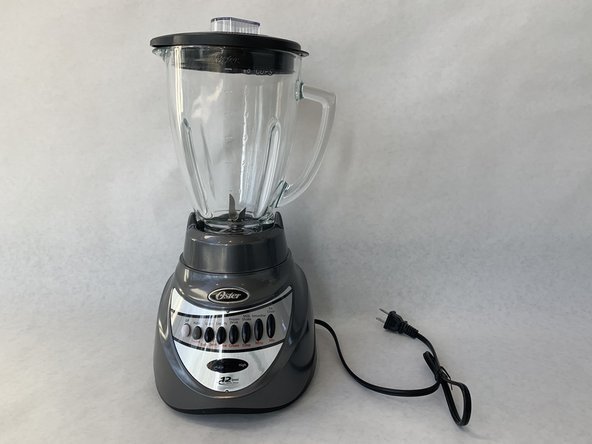
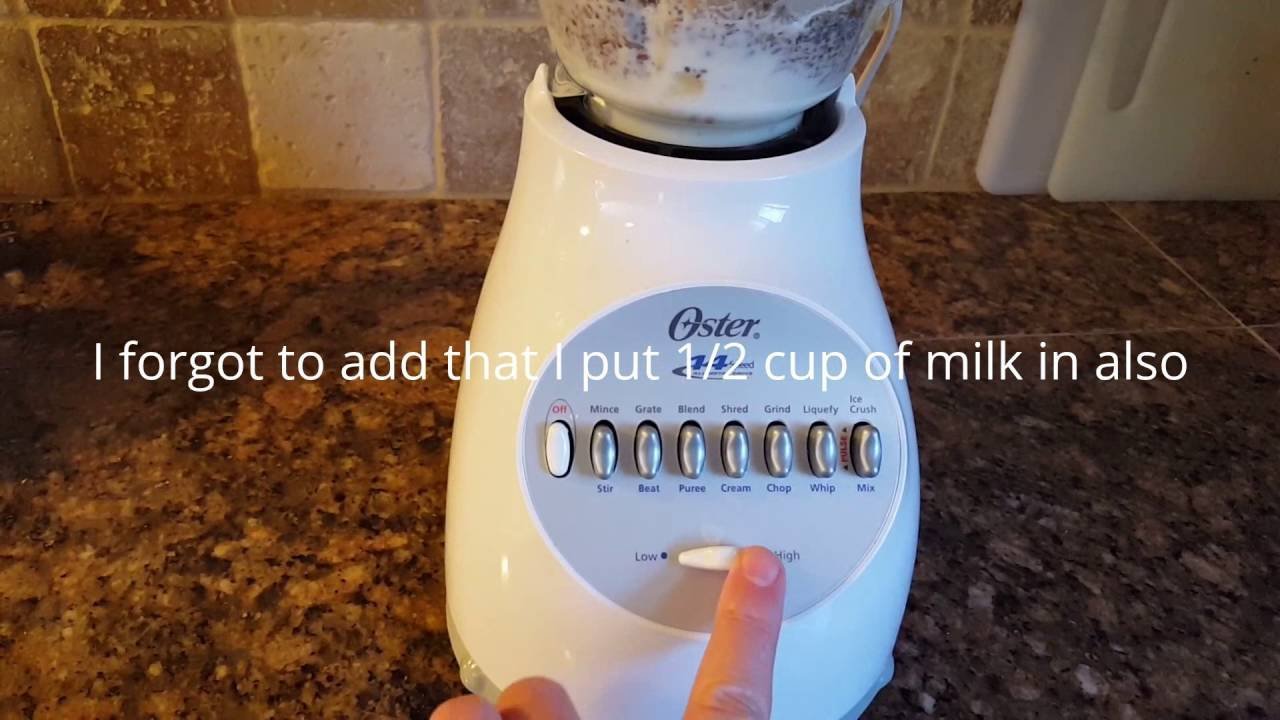
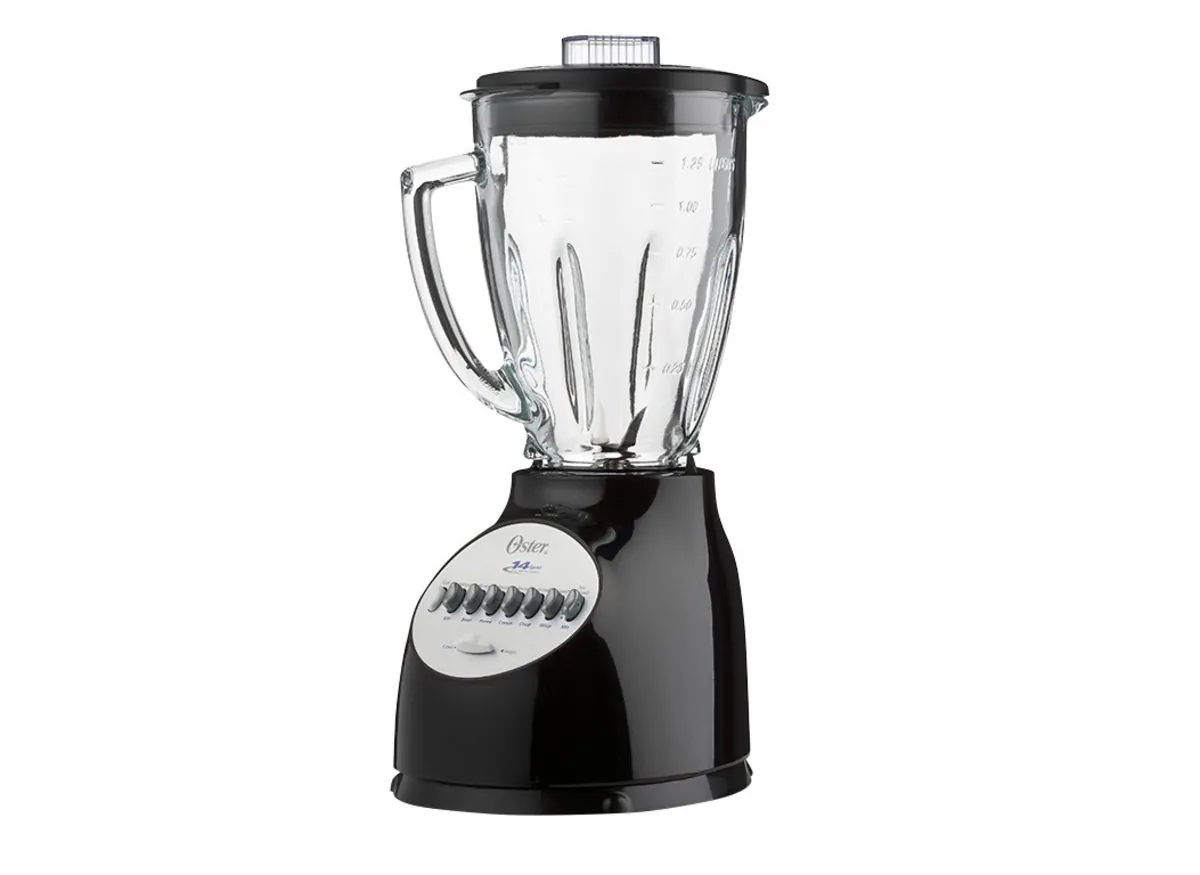
Your model’s control type changes the steps. Some 14-speed Oster blenders use a rotary dial you turn to a numbered speed. Others use a touch pad with a row of buttons. The dial lets you sweep through speeds while running; the pad usually needs a stop between changes. Check which one is on your counter before you start.
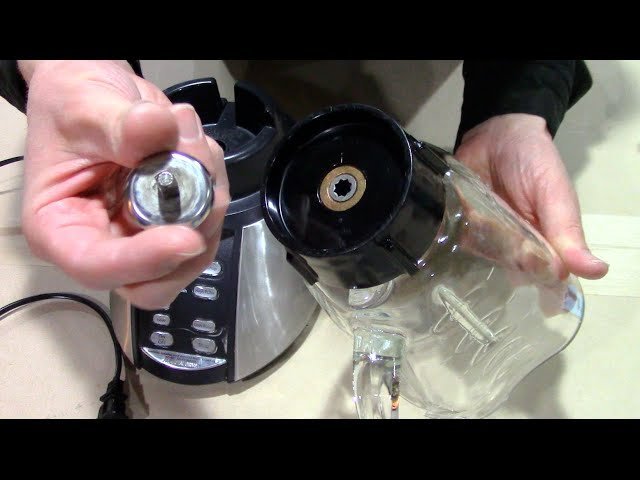
Lid and jar seating is the mistake people make most. A jar that isn’t twisted fully onto the base will run, but it wobbles and the blade sits off-center. The result is chunks at the top and a hot motor. Twist until it stops, every time.
Wattage sets what’s realistic. A lower-wattage motor will still blend a smoothie, but it needs more pulse bursts and longer rests on ice. The wattage is printed on the rating label under the base — read yours rather than guessing.
Step-by-step: running the blender
- Set the jar on the base and twist it clockwise until it stops. The jar should sit flat with no gap and no wobble when you press down on the rim.
- Add liquids first, then soft foods, then hard foods on top. Pour 1 cup of milk or juice before you add 1 cup of frozen berries. Liquids at the bottom keep the blade moving.
- Fill to between one-half and two-thirds of the jar. Never go past the max line printed on the jar. For a single serving, use at least 1 cup of total ingredients so the blade has something to catch.
- Press the lid down until the edges click into the jar rim. If your model has a filler cap in the lid, twist it closed. A loose lid means splatter on the first press.
- Plug the cord into the outlet and check the base switch, if your model has one. Some Oster bases have a power switch at the back that must be on before any speed button works.
- Start on the lowest speed for 5 seconds. This pulls the food down onto the blade. Skipping this step is why people get a lump of frozen fruit stuck at the top.
- Move up one speed at a time, pausing 2 to 3 seconds between each. For a smoothie, stop at the middle of the range. For soup or sauce, stay low the whole time.
- Use pulse for ice and frozen fruit. Press and release in 1-second bursts, 5 to 8 times, letting the blade stop between presses. This is the setting that crushes ice without heating the motor.
- Blend for 30 to 60 seconds total for most jobs. Stop when the mix moves in one steady swirl with no chunks at the sides.
- Press the off button, then unplug the cord before you take the jar off. Twist the jar counter-clockwise to release it, and lift the lid straight up.
The judgement call is knowing when to stop. A smoothie that looks slightly grainy after 45 seconds usually just needs one more pulse, not another full minute. Running it longer adds heat, not smoothness.
If your jar has a crack, a chipped blade, or the base smells like burning plastic, stop. Don’t open the base to look inside — a capacitor can hold a lethal charge even when unplugged. Take it to an authorized service center.
Which speed for which job
The right speed depends on what’s in the jar, not on the number of speeds your model has. Match the job to the band, then adjust within it.
| Your situation | What to do | What it takes | What to watch for |
|---|---|---|---|
| Smoothie with frozen fruit | Liquids first, then pulse, then mid speed | 45 to 60 seconds | Chunks stuck at jar sides |
| Crushing ice only | Pulse in 1-second bursts | 5 to 8 bursts | Motor smell or heat |
| Hot soup (already cooked) | Low speed, vented lid | 30 to 40 seconds | Steam pressure under lid |
| Baby food or puree | Low to mid speed | 40 to 60 seconds | Unblended lumps at top |
| Nut or seed paste | Small batches, pulse, scrape often | Several rounds | Motor overheating |
| Salad dressing or sauce | Low speed | 15 to 20 seconds | Over-blending, thin result |
| Single-serve shake | At least 1 cup total, mid speed | 30 seconds | Too little food to blend |
What careful users do differently
They load the jar in layers
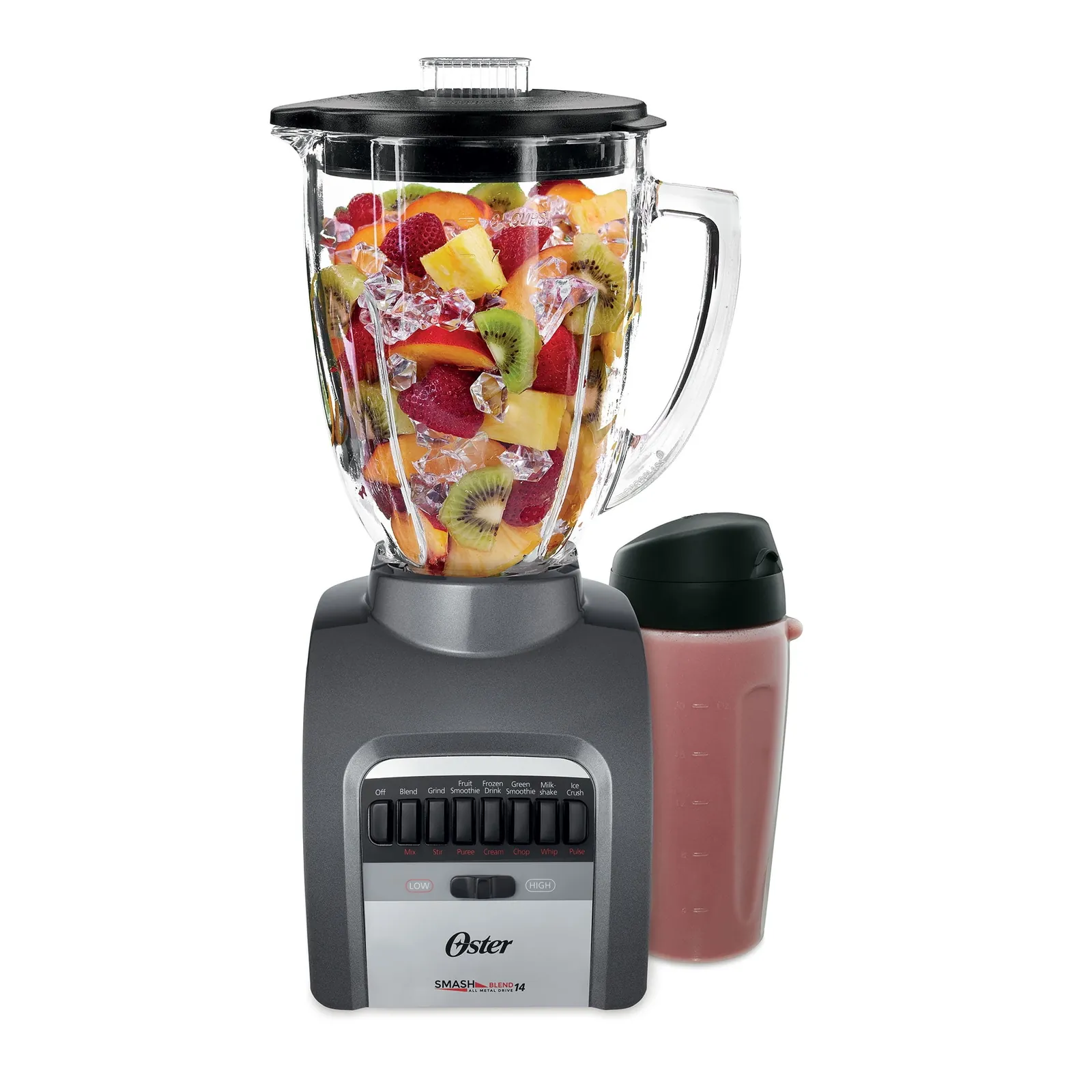
Liquids go in first, every time. That gives the blade something to pull, so frozen fruit gets dragged down instead of sitting on top. Soft items like banana or yogurt go in the middle. Hard items go on top, farthest from the blade at the bottom of the jar.
They also leave headroom. Filling to two-thirds instead of the max line gives the mix room to fold over itself. That’s the difference between a smooth texture and a jar with a pocket of whole berries spinning in the middle.
They stop before the motor tells them to
A blender motor that’s working too hard gets warm and starts to smell. Careful users run 30 to 60 seconds at a time, then let the motor rest for the same length before the next round. They also unplug before scraping the jar with a spatula — never with the blade running.
What they leave alone: the base housing. Nothing inside the base is user-serviceable, and the manual says so. Cleaning stops at the jar, lid, blade assembly, and the outside of the base with a damp cloth.
What goes wrong, and the fix
Most problems come down to fill level, lid seating, or running hard food on a low speed. Match what you see to the fix below.
| What you notice | What it usually means | What to do first | How to stop it happening again |
|---|---|---|---|
| Food won’t move | Jar too full or too empty | Stop, remove half, restart | Fill to two-thirds |
| Chunks left at the top | Hard food on low speed | Pulse 3 to 4 times | Start low, then move up |
| Liquid leaking at base | Jar not twisted on fully | Stop, unplug, reseat jar | Twist until it stops |
| Motor smells hot | Running too long at once | Stop, rest 2 minutes | Blend in 60-second rounds |
| Loud rattle or wobble | Jar off-center on base | Unplug, reseat jar | Check seating every time |
| Lid pops off mid-blend | Lid not clicked down | Stop, press lid edges down | Press all around the rim |
| Blend looks grainy | Not enough liquid | Add 1/4 cup liquid, pulse | Keep liquids at the bottom |
The rules that apply
Oster’s own use-and-care manual is the authority here, and it ships in the box and sits on Oster’s website. It sets the max fill line, the cleaning rules, and what voids the warranty. Read your model’s version, because the numbers differ between 14-speed models.
The main limits are simple. Never put the base, the cord, or the plug in water. Never run the blender empty. Never use a spatula or spoon inside the jar while the motor is running. Never put hot liquid in a sealed jar — the steam builds pressure and the lid can blow.
Cleaning is the one rule people break most. The jar, lid, and blade assembly are usually top-rack dishwasher safe on Oster models, but check your manual — some blade assemblies are hand-wash only. The base wipes clean with a damp cloth and nothing more.
The warranty covers manufacturing defects, not damage from misuse. Keep your receipt. If your blender fails inside the warranty period, contact Oster directly rather than opening the base yourself.
What this really costs you
The blender itself is a one-time cost, and prices vary by model and by where you buy. Check Oster’s site or a retailer for today’s number — it changes with sales. A replacement jar, lid, or blade assembly costs less than a new blender and is usually the cheaper fix.
The ongoing cost is time. A smoothie takes about 1 minute of blending plus 2 minutes of prep and cleanup. Ice crushing takes 30 seconds of pulse bursts. Soup takes under a minute. None of that adds up to much unless you’re blending several times a day.
The hidden cost is motor life. Long runs at high speed on hard food wear a motor faster than short bursts. Resting the motor between rounds costs you nothing and stretches the years you get out of the base. Running it hot is what shortens the life.
If you’re blending daily for a family, a higher-wattage model pays off. If you make one shake a week, the 14-speed base you already own is enough.
Keeping it working
Rinse the jar with warm water and a drop of dish soap right after each use, before food dries on the blade. Dried residue is harder to remove and dulls the blade over time. Then wash the jar, lid, and blade assembly by hand or in the top rack, depending on what your manual allows.
Wipe the base with a damp cloth and dry it. Don’t submerge it. Check the cord for cracks or fraying every few months — a damaged cord is a shock risk and means the unit should be serviced or replaced.
The sign it needs attention: the blade feels loose in the assembly, the jar has a hairline crack, or the motor struggles on jobs it used to handle. A loose or cracked blade assembly gets replaced, not repaired. You don’t need to replace the whole blender.
Store it with the lid off so the jar dries fully. A closed, damp jar grows a smell that’s hard to get rid of.
When this isn’t the right approach
If your base smells like burning, sparks, or trips the breaker when you plug it in, stop using it. That’s not a speed-setting problem. Take it to an authorized Oster service center or replace it — don’t open the base yourself.
If you need to blend something a blender can’t handle — nut butter in large batches, hot soup for a crowd, or fibrous greens like kale stems — a high-power blender or a food processor is the right tool. A 14-speed Oster will do small amounts with patience, but it’s the wrong machine for daily heavy jobs.
If you’re blending for someone with a medical condition that needs texture control, like dysphagia, follow the guidance from their doctor or a speech-language pathologist, not a blender manual. Texture levels are a medical matter.
Frequently asked questions
How long do you blend a smoothie in an Oster 14 speed blender?
About 45 to 60 seconds total, starting on low for 5 seconds, then moving up to the middle of the range. If you’re using frozen fruit, add 5 to 8 pulse bursts first. Stop when the mix swirls steadily with no chunks at the sides.
Can you crush ice in an Oster 14 speed blender?
Yes, using pulse in 1-second bursts, 5 to 8 times, with the blade stopping between presses. Don’t run it continuously on high — that heats the motor. If your model’s manual says ice isn’t recommended, follow the manual over this advice.
Why is my Oster blender not turning on?
Check three things in order: the jar is twisted fully onto the base, the power switch at the back is on, and the outlet works with another device. If all three are fine and it still won’t run, the unit needs service — don’t open the base.
Is it safe to put hot soup in an Oster blender?
Only if you let it cool first and vent the lid. Sealed hot liquid builds steam pressure and can blow the lid off. Fill the jar no more than halfway with hot liquid and hold a folded towel over the lid while blending on low.
What speed should you use for frozen fruit?
Start on the lowest speed for 5 seconds, then move up to the middle of the range. If the fruit stalls, stop and pulse instead. Adding 1/4 cup of liquid helps the blade pull the fruit down.
How full should you fill an Oster blender jar?
Between one-half and two-thirds full for most jobs, and never past the max line printed on the jar. For a single serving, use at least 1 cup of total ingredients so the blade has something to catch.
Does the number of speeds matter for blending?
Not as much as wattage and jar fill. The 14 speeds give you control over texture, but a well-filled jar on a mid speed beats a poorly filled jar on the perfect speed. Read your model’s wattage on the rating label.
What happens if you blend without the lid?
Food flies out, and on some models the safety interlock stops the motor anyway. Always press the lid down until the edges click. If your lid is cracked or won’t seal, replace it before the next use.
Your first blend
Start with a simple smoothie: 1 cup of milk, 1 banana, and 1 cup of frozen berries, filled to two-thirds. Run it low for 5 seconds, then mid speed for 45 seconds.
You’ll know it’s done when the mix swirls in one steady current with no chunks at the sides. If the motor smells hot, the jar rattles, or the base sparks, stop and get it serviced — that’s the sign this is no longer a do-it-yourself job.
If the mix stalls and the blades just spin air, you have too little liquid. Add milk a quarter cup at a time, never all at once, and pulse between additions.
Hard vegetables and ice cubes are the two loads that kill cheap motors. If your machine is under 500 watts, blend those in small batches or skip them.