Where To Find Oster Blender Model Number
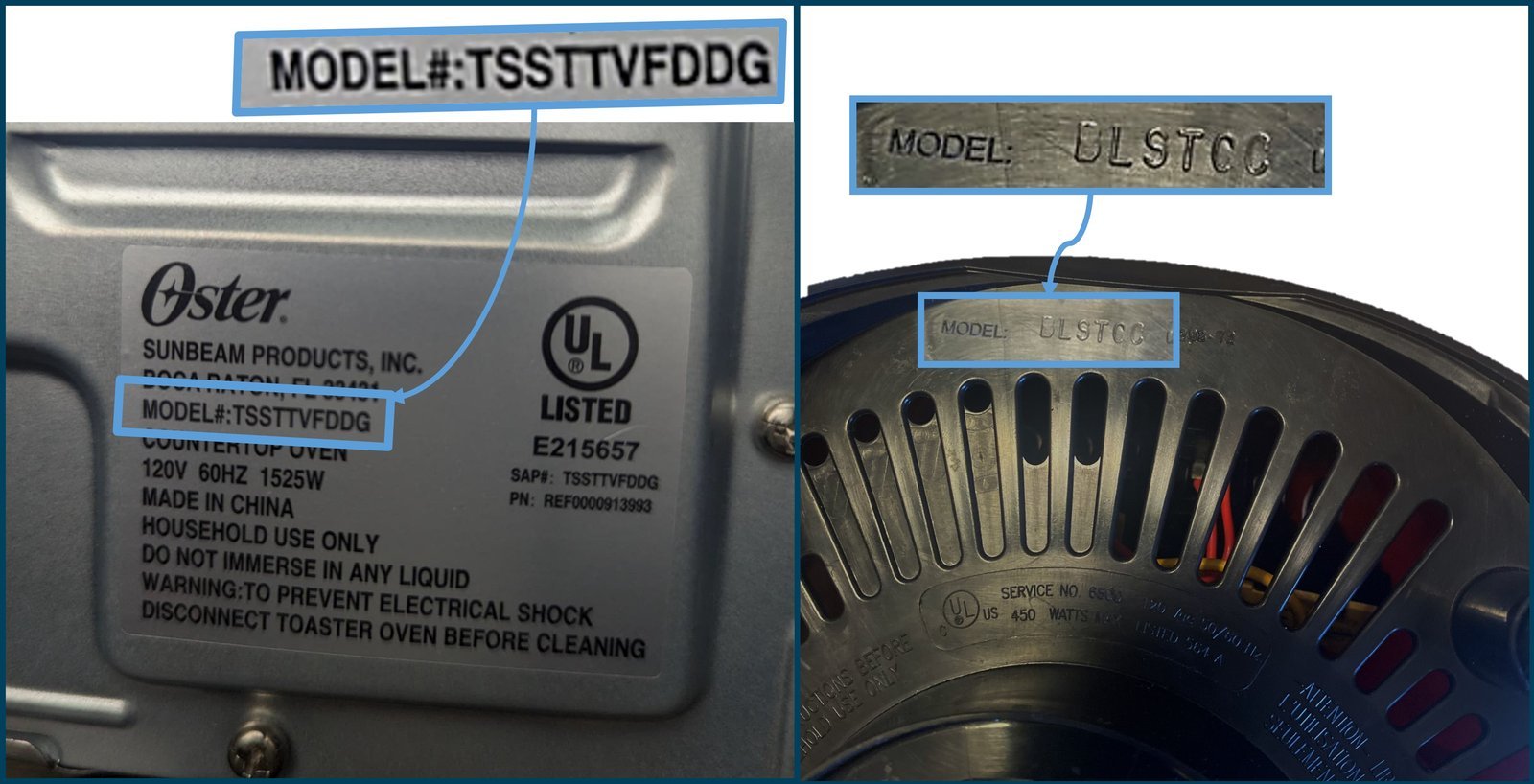
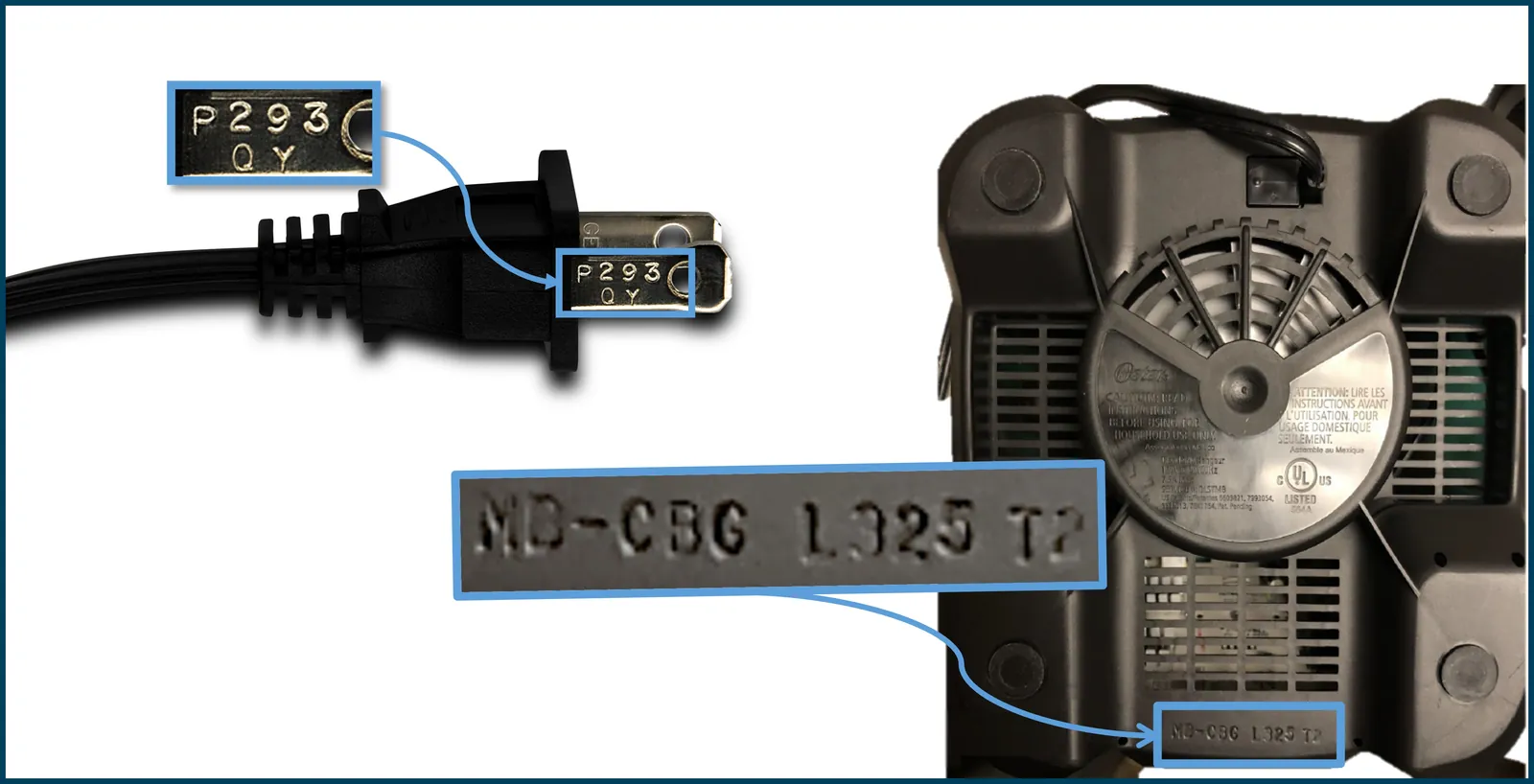
You’ll find the Oster blender model number on the bottom of the motor base, stamped into the rating plate molded into the plastic. It’s usually a mix of letters and numbers, like BVCB07 or 6811, and it sits right next to the watts and the volts.
What you see depends on your machine. Jar-style blenders put the plate on the base’s underside; personal blenders sometimes hide it inside the cup well. Older units may have a worn or painted-over label. This page covers all three cases.
Turn the base over and read the plate in daylight before you do anything else. On most Oster bases the number is the top line of the plate, with the watts below it and the volts below that. If the top line is rubbed away, the watts figure alone won’t identify the blender.
A worn label is the common snag. Rubbing the plastic with a fingertip makes it worse, so photograph the plate first and read the model number off the photo. If the label is gone entirely, measure the base’s width and note the jar size, then match those against listings for that era.
Which reader this page is for
Three kinds of people search this. The first owns a blender that’s still working and wants the right replacement jar, blade or gasket. They need the exact model code so the part fits on the first try. The second is filling out a warranty claim or a product registration and found an empty box where the number should be. The third is comparing two used blenders at a garage sale and wants to know which one is worth buying.
This page serves the first two best. If you’re hunting parts or paperwork, the steps below get you the number in a few minutes. If you’re comparing used machines, the model tells you the series, not the condition — you’ll still need to run the motor and check the blade.
The rest of this page assumes your blender is unplugged and cool, and that you can turn it over without spilling anything. If it’s full of smoothie, empty it first.
What changes where the number is
The number’s location shifts with the blender’s shape, so check these before you start hunting.
The base style. Full-size blenders with a heavy motor base carry the plate on the underside. Personal blenders and smoothie makers often put it on the back or under the cup rim. Turn your machine over and look at the whole surface, not just the center.
The label’s condition. A plate that’s been scrubbed with abrasive cleaner or soaked in the sink can lose its print. If yours is faded, tilt it toward a window or use your phone’s flashlight at a low angle. The stamped digits often survive even when the ink doesn’t.
The age of the unit. Older Oster blenders may use a different numbering style than current ones. The format isn’t the same across every decade, so don’t assume a short number is wrong.
Where you bought it. Retailer-exclusive versions sometimes carry a model code that doesn’t match the main catalog. That’s normal, and it’s the code you give when ordering parts.
The mistake people make most often is reading the serial number and treating it as the model. They’re different fields on the same plate, and the serial won’t get you the right jar.
Finding it step by step
- Unplug the blender and let it sit for a minute. The cord should be fully out of the wall, not just switched off.
- Empty the jar and set it aside. You want the base alone, with nothing balanced on top.
- Turn the base upside down on a towel so the surface doesn’t scratch. Look at the whole underside, not just the middle.
- Find the rating plate — a molded rectangle with printed text. It carries the watts, the volts, and the model code.
- Read the model field. It’s the line labeled “Model” or “MOD,” usually 4 to 8 characters mixing letters and numbers.
- Write it down exactly, capitals included. Copy it onto paper or into your phone notes rather than trusting memory.
- Check for a second label on the back or under the jar rim if the underside is blank or worn.
- Photograph the plate with your phone before you put the blender back. That photo settles any later argument about the code.
- Compare your code against the parts listing for your blender on the Oster site or the retailer’s page. If it matches, you have the right number.
The judgement call is whether you’ve got the model or the serial. The model is short and often starts with letters; the serial is longer and usually all digits. If the field you’re reading has ten or more characters and no letters, you’re on the wrong line.
The common cases at a glance
Here’s how the search changes depending on what you’re holding.
| Your situation | What to do | What it takes | What to watch for |
|---|---|---|---|
| Standard countertop base | Check underside plate | 2 minutes | Reading serial instead of model |
| Personal blender cup | Check back and cup rim | 3 minutes | Label hidden under rubber grip |
| Faded or scratched plate | Angle a light across it | 5 minutes | Mistaking a stamped digit for a scratch |
| No label at all | Check manual or receipt | 10 minutes | Manual may list a family, not exact code |
| Warranty claim | Photograph plate first | 5 minutes | Claim form wants the full code |
| Buying used | Ask seller for a photo | Varies | Seller may send the serial |
What careful owners do differently
People who get the right part on the first order do two things before they buy anything: they confirm the code against the parts page, and they check the jar’s fitment separately from the base.
They read the plate, not the box
The box and the manual often carry a family name rather than the exact model. The plate on the machine is the authority. If the plate and the box disagree, trust the plate, because that’s what the factory stamped onto your unit.
They check the part, not just the number
A matching model code doesn’t guarantee a matching jar. Blade assemblies and gaskets changed between production runs of the same model, so the code narrows the search but doesn’t finish it. Compare the jar’s thread count and the blade’s shape against the listing photo before you pay.
What goes wrong, and the fix
Most problems here come down to reading the wrong field or a label that’s too worn to read.
| What you notice | What it usually means | What to do first | How to stop it happening again |
|---|---|---|---|
| Number won’t match any part | You read the serial | Find the line marked Model | Photograph the plate |
| Label is blank | Print worn off | Angle a light across it | Stop scrubbing the base |
| Two different codes | Retailer-exclusive version | Use the one on the plate | Note both in your phone |
| No plate anywhere | Older or rebadged unit | Check manual and receipt | Keep the receipt in the box |
| Part arrives and won’t fit | Wrong production run | Return and match by photo | Compare blade shape, not just code |
The rules that decide this
The model code is a manufacturer’s identifier, not a legal one, so there’s no government rule about where it must sit. Oster places it on the rating plate, and that plate also carries the electrical rating the blender was built to.
In the US, the electrical rating on that plate is what Underwriters Laboratories tested the unit against, and the mark on the plate tells you which body listed it. If the plate is missing, you can’t confirm that listing, which matters if you’re reselling the machine.
For warranty, Oster’s own terms govern what proof they accept. Check the warranty page on Oster’s site for your region, since the terms differ by country. If your claim needs a repair rather than a part, that’s a job for an authorized service center, not a home fix — the motor base holds a capacitor that can carry a charge even unplugged.
What this costs you in time and money
The search itself is free. The cost lands on the part you buy afterward, and the price swings with what you need.
A replacement jar for a full-size Oster blender is typically inexpensive relative to buying a whole new blender, depending on size and whether it includes the blade. A gasket or a single blade assembly usually costs less than a jar. These are typical retail ranges, not fixed prices — check the current listing on Oster’s site or a major retailer before you order.
The real cost is a wrong order. Shipping a jar back and waiting for the right one adds days, and some sellers charge return shipping. That’s why the photo matters: it turns a guess into a match.
If you’re paying a repair shop, ask for the diagnostic fee up front. It varies by shop and isn’t set by Oster.
Keeping the number handy
Once you have the code, store it where you’ll find it in two years. Write it inside the blender’s manual, save the photo to a folder you’ll remember, and keep the receipt with the manual. If you registered the product, the code is in your account.
The sign you need to check it again is a part that doesn’t seat properly — a jar that wobbles, a lid that won’t lock, or a gasket that leaks. Before you assume the part is faulty, re-read the code on the plate. A transposed digit is the usual cause.
If the plate has worn past reading, a replacement base plate isn’t a standard part. In that case, use the photo you took earlier, or contact Oster support with your purchase details.
When this page won’t help
If your blender is under warranty and the motor has failed, don’t hunt for the number to buy parts — file the claim instead. Oster’s warranty terms decide whether you get a repair or a replacement, and opening the base yourself can void that.
If the machine is a commercial or vintage unit with no readable plate, a parts search won’t work. Contact Oster support directly, or take it to an authorized service center that handles older models.
And if you’re dealing with a cracked jar on a machine you barely use, replacing the whole blender may cost less than the part plus shipping. Compare both prices before you commit.
Frequently asked questions
Where is the model number on an Oster blender?
On the bottom of the motor base, stamped into the rating plate. Personal blenders sometimes carry it on the back or under the cup rim instead. Turn the base over and look at the whole underside.
How do I tell the model number from the serial number?
The model is short — usually 4 to 8 characters with letters and numbers mixed. The serial is longer and mostly digits. The plate labels each field, so read the line marked Model or MOD.
Can I find the model number without the label?
Yes, if you kept the manual or receipt. Both often list the model, though the manual may name a family rather than the exact code. Your retailer’s order history can also carry it.
Is it safe to turn my blender upside down to read it?
Yes, once it’s unplugged and empty. Set it on a towel so the surface doesn’t scratch, and don’t run it until it’s upright and dry. Never open the base housing — a capacitor inside can hold a charge.
What happens if I order a part with the wrong number?
It usually won’t fit, and you’ll pay return shipping. Match the jar’s thread and the blade’s shape against the listing photo before you buy, not just the code.
How long does it take to find the number?
About 2 minutes on a standard countertop base with a readable plate. Add a few minutes if the label is faded and you need to angle a light across it.
Does the model number matter for a warranty claim?
Yes. Oster’s claim process asks for the model and often the serial. Photograph the whole plate before you start the claim, since the terms differ by region.
Why does my model number not match any listing?
You may have a retailer-exclusive version, or you’re reading the serial. Use the code on the plate and search by that exact string, including any letters.
Start with the plate on the bottom
Turn your blender over, unplugged and empty, and read the line marked Model. Write down every character, including any letters after the numbers. Expect the right part to fit on the first order once you’ve matched both the code and the blade shape.
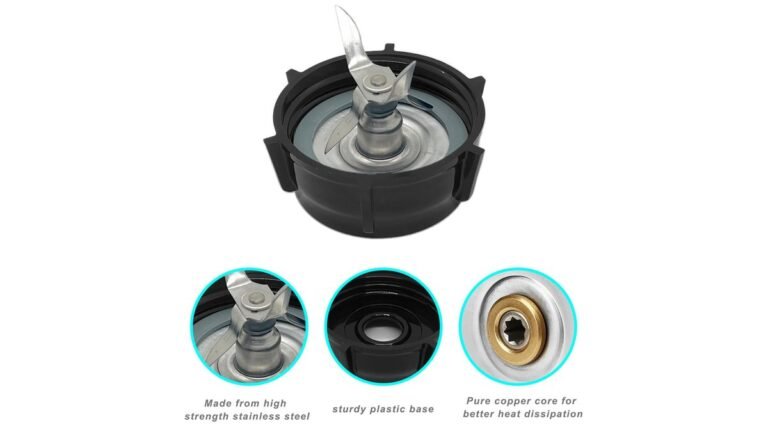
The code alone isn’t enough. Two blenders can share a model number and still take different jars, because the same model was sold in more than one configuration. Match the blade shape too: count the blades and note whether they’re straight or curved.
If the motor has failed or the base is cracked, stop and contact Oster support or an authorized service center instead.