How To Make Soup In Vitamix Blender: A Simple Step-By-Step Guide
You can create hot, smooth meals by using a high-speed machine because the friction of the blades is how to make soup in vitamix blender at home. By running the motor on high for five to six minutes, the kinetic energy heats your raw ingredients to a steaming temperature without a stove.
Your result depends on the power of your specific motor base, the total volume of ingredients, and the starting temperature of your liquids. These factors change the time required to reach a safe, hot serving temperature.
Who should make soup in a Vitamix
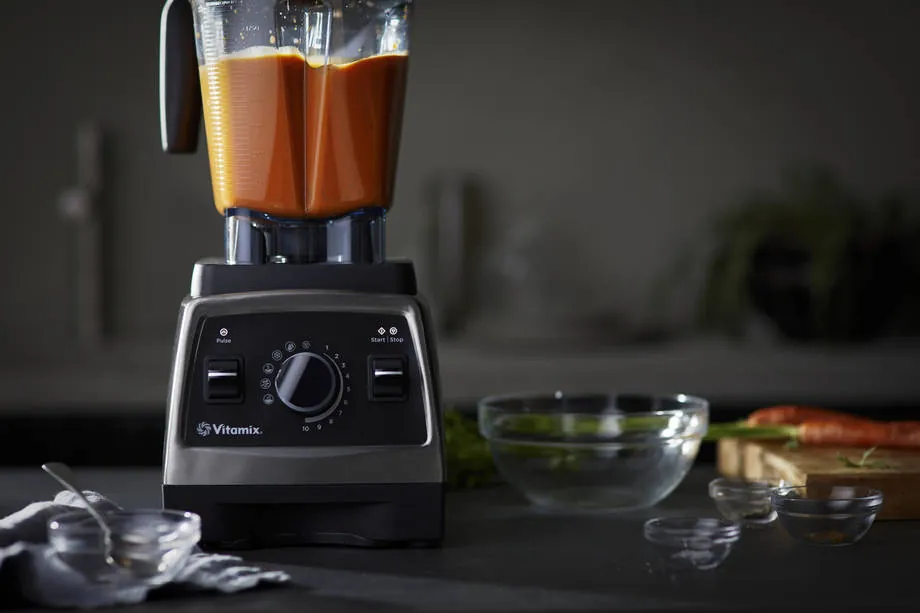
This guide serves home cooks who own a high-performance blender and want to use it for more than just smoothies. You likely have a machine with a powerful motor capable of reaching high speeds, which is the baseline assumption for this process. If your blender lacks a high-speed setting, it won’t generate enough heat through friction to cook raw vegetables, and you should use a stovetop method instead.
We assume you have access to fresh, chopped vegetables and a liquid base like broth or water. You don’t need to be a professional chef, but you should be comfortable with basic kitchen safety and handling hot liquids. This information isn’t for users with low-wattage personal blenders, as those motors can overheat when running for the long periods required to generate heat.
If your user manual specifies a maximum run time of less than five minutes for high-speed tasks, follow that limit strictly to avoid damage. This guide focuses on standard vegetable-based soups where the goal is a smooth, hot texture. If you prefer chunky soups, the high-speed blending process isn’t the right choice, as it will pulverize all solid ingredients into a purée.
Factors that change your result
The total volume of ingredients is the most important factor in your success. If you fill the container past the maximum line, the blades will struggle to create the friction needed for heat, leading to uneven cooking. A half-full container generally heats faster than one filled to the maximum capacity.
The starting temperature of your liquid base matters significantly. If you start with room-temperature broth, your blending time will be longer than if you start with pre-heated liquid. Using cold, refrigerated ingredients adds two to three minutes to the total processing time.
Blade sharpness affects how quickly the machine can pulverize the fibers in your vegetables. If your blades are dull, the motor works harder to achieve the same texture, which increases the heat but also puts more strain on the unit. You can check the condition of your blades by looking for visible nicks or rounded edges.
The type of vegetables you use also changes the outcome. Starchy vegetables like potatoes or carrots take longer to break down than softer items like tomatoes or spinach. If you mix hard and soft ingredients, chop the hard ones into one-inch pieces to ensure everything blends at the same rate.
Most people make the mistake of adding cold, dense vegetables without enough liquid. This forces the motor to stall and prevents the friction from moving through the mixture. If the blender sounds like it’s struggling, add 120 milliliters of extra broth to help the vortex form.
Steps for blending soup
- Prepare your ingredients by cutting all vegetables into one-inch cubes to ensure they blend evenly.
- Place your liquids into the container first, followed by the soft ingredients and then the hard vegetables.
- Secure the lid tightly and place the lid plug into the opening to prevent splashing.
- Start the machine on its lowest speed setting and quickly increase it to the highest speed.
- Blend on high for five to six minutes, which assumes a 1,200-watt motor; for lower-wattage units, check the temperature after seven minutes.
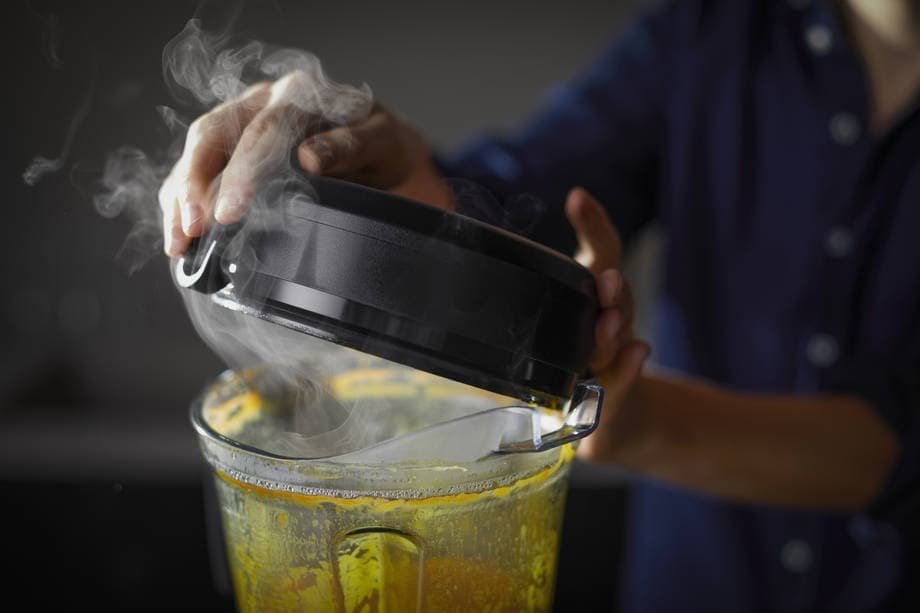
- Observe the steam escaping from the lid plug, which is the primary sign that the friction has successfully heated the contents.
- Turn the dial back to the lowest speed before switching the power off to prevent the motor from surging.
- Pour the soup immediately into bowls, as the heat will dissipate quickly once it leaves the insulated container.
The single judgement call that separates a good result from a poor one is the texture check. If you notice small chunks, continue blending on high for 30-second bursts until the mixture is completely uniform. Don’t run the motor for more than eight minutes total to avoid overheating the internal components. If the mixture remains cold after eight minutes, the motor is likely not powerful enough for this method, and you must finish the soup on a stove.
Variations for different soup types
Raw vegetables require high-speed blending for at least six minutes to break down fibrous cellulose. If your blender lacks a heating element, you must sauté the vegetables until tender before blending to avoid a raw, grassy taste. Always leave the center cap of the lid loose to allow steam to escape, or pressure will build and blow the lid off.
Pre-cooked vegetables only need two minutes on medium speed. Over-processing at this stage turns a rustic soup into a gummy paste. Stop when the texture is uniform but still shows slight body.
When working with creamy bases, add your dairy in the final 30 seconds. High heat causes heavy cream to curdle or separate. If you see oil droplets forming on the surface, you have already overheated the mixture.
Frozen broth must be fully thawed before it hits the blades. Adding frozen chunks creates uneven lumps and risks damaging the blender’s motor. If you’re in a rush, place the container in a warm water bath until the edges liquefy.
For thick purées, use the tamper tool continuously to push ingredients into the blades. Without it, air pockets form around the base, causing the blades to spin uselessly. If the mixture stops circulating, add a quarter-cup of stock to restore the vortex. If you ignore this, the motor may overheat and fail.
Getting the best texture
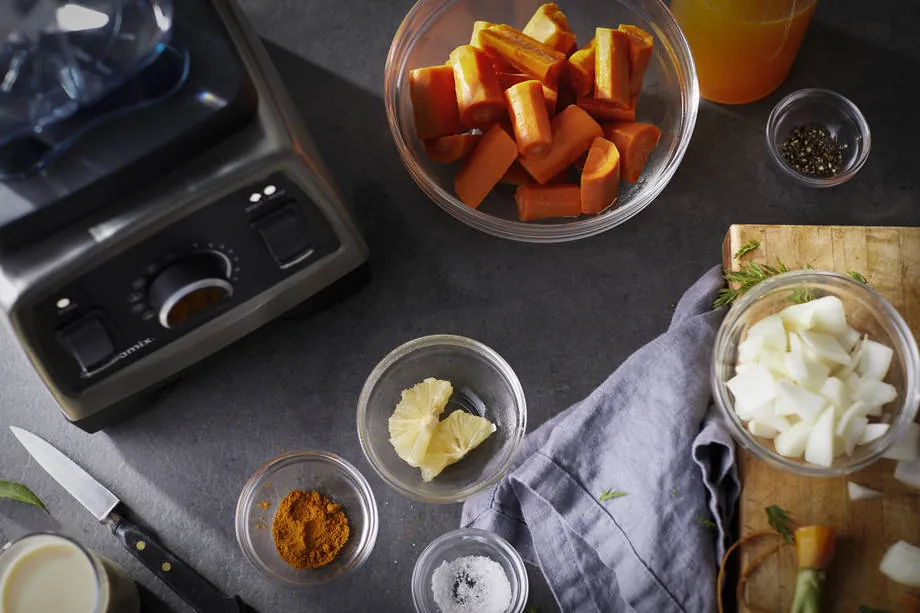
Preparing your ingredients correctly
Consistent preparation is the key to a professional result. Experienced users always chop their vegetables to a uniform size to prevent large pieces from getting stuck under the blades. If you leave large chunks, the vortex will break, and the friction will stop, leaving you with cold spots in your meal. Always ensure your ingredients are fresh, as older vegetables can become stringy and ruin the final consistency.
Managing the blending process
The best results come from keeping the vortex moving throughout the entire cycle. Use the tamper tool that came with your machine to push ingredients down toward the blades if you notice the flow slowing. Never use a metal spoon or fork to push ingredients, as this can damage the blades or the container. Watch the motor speed; if it starts to slow down, add a small amount of liquid to restore the flow.
Problems and common fixes
| What you notice | What it usually means | What to do first | How to stop it |
|---|---|---|---|
| Motor slows down | Too many solids | Add 120ml liquid | Use more broth |
| Uneven chunks | Inconsistent prep | Blend 30s longer | Chop pieces smaller |
| Leaking lid | Lid not secure | Clean the seal | Lock lid tight |
| Cold mixture | Low motor power | Finish on stove | Use hot water |
| Burnt smell | Motor overworked | Turn off immediately | Reduce run time |
If the motor begins to whine or labor, stop immediately. Running a stalled motor for more than five seconds can permanently fuse the internal bearings. Check the base for debris before restarting.
When blending fibrous vegetables, you must account for density. If the blades cavitate—spinning in a pocket of air without pulling down ingredients—the ratio of liquid to solid is too low. Add exactly 120ml of liquid to re-establish the vortex.
A burnt smell usually signals that the motor’s thermal protection switch has tripped. This happens when you exceed the machine’s duty cycle. If you smell ozone or singed plastic, unplug the unit and let it sit for twenty minutes. Don’t force a reset by plugging it back in while hot.
If you’re processing hot ingredients, always remove the center cap from the lid. Steam pressure builds rapidly and will force liquid through the seal, creating a mess. If the lid leaks despite being locked, check the silicone gasket for mineral buildup. Scrub it with a soft brush and white vinegar to restore the vacuum seal.
Safety and operational standards
The primary safety rule for high-speed blending is to never leave the machine unattended while it’s running. According to the manufacturer guidelines for most high-performance blenders, the motor is designed for short, high-intensity bursts rather than long, continuous operation. If you feel the base of the unit becoming hot to the touch, turn it off immediately and let it cool for 15 minutes before trying again.
Never attempt to remove the lid while the blades are spinning. The pressure created by the steam inside the container can cause hot liquid to spray out if the lid isn’t properly secured. If you need to add ingredients mid-blend, use the opening in the center of the lid and replace the cap immediately.
If you suspect your unit has a faulty seal or a cracked container, stop using it for hot liquids, as the risk of burns is high. Check your specific user manual for the maximum temperature rating of your container, as some older plastic models may not be rated for boiling liquids.
Costs and efficiency
The real cost of this method is the energy usage and the wear on your motor. A high-speed blender pulls significant electricity during the six-minute run time, which is higher than a standard stovetop burner but lower than a full oven. You save time on cleanup because you don’t need to wash extra pots or pans.
If your blender emits a burning smell or the base feels hot to the touch after just three minutes, stop immediately. Running a motor under heavy load for the full cycle causes internal friction that degrades the bearings. Replacing a high-end blender motor often costs more than half the price of a new unit.
When preparing fibrous roots or thick nut-based soups, use the stove instead. The rule is simple: if the blade speed drops noticeably while blending, the motor is working too hard. Switch to stovetop simmering for these dense mixtures to preserve your equipment’s lifespan.
The cost of ingredients varies by season and region. You can lower your costs by using seasonal vegetables or frozen produce that’s already pre-chopped. If you find the blender is getting very hot, the cost of a new motor is high, so it’s cheaper to use the stove for very thick or heavy soups. Compare the cost of your electricity usage against the convenience of having a single-vessel meal.
Keeping your blender ready
After you finish your soup, clean the container immediately to prevent food from drying onto the blades. Food residue hardens into a stubborn film within minutes, which forces the motor to work harder during your next blend.
Fill the container halfway with warm water and a single drop of dish soap, then run it on high for 30 seconds to scrub the sides. Rinse it thoroughly and air dry it upside down to prevent moisture from pooling around the blade assembly.
If you notice a persistent dullness in the plastic, it’s likely from hard water deposits rather than actual damage. You can remove these by soaking the container in a solution of one part white vinegar to three parts water for one hour before washing. Don’t use abrasive scouring pads, as these can dull the finish of the container and make it harder to clean.
Check the base of the container for any signs of leaking lubricant or dark residue. If you see deep scratches or cracks inside the container, it’s time to replace the part to ensure food safety. A cracked pitcher can trap mold that’s impossible to reach with a sponge.
If the blades feel sluggish or make a grinding sound, stop using the unit immediately. Replacing the container now costs significantly less than repairing a burnt-out motor or dealing with a failed seal during a blend.
When to use a stove instead

If you’re making a soup with large chunks of meat or very dense root vegetables, the blender is the wrong tool. These ingredients don’t break down into a smooth texture without excessive blending, which will overheat your motor. Use a traditional soup pot on your stove for these recipes.
If your recipe requires more than 48 ounces of liquid, you must use a stockpot. Blending in multiple batches is inefficient and increases the risk of motor strain. A standard blender jar reaches its limit at the halfway point when dealing with hot liquids; filling it further invites dangerous pressure buildup and potential lid failure.
Use a stockpot for large batches and only use the blender if you need to purée a small portion for a smooth texture. If you’re preparing a base for a stew that needs to reduce, the stove is mandatory. A blender doesn’t reduce liquids as effectively as a stovetop simmer, which may result in a thinner consistency.
Always remember that a blender is a tool for texture and speed, not for slow-simmering complex flavors. Switch to a stove-top immersion method or a standard pot to preserve the structural integrity of your ingredients and the longevity of your kitchen equipment.
Frequently asked questions
Can I use frozen vegetables for soup?
Yes, you can use frozen vegetables, but they must be thawed or added to hot liquid to ensure they reach a safe temperature. If you add frozen items directly, they will lower the temperature of the soup and require more blending time, which may cause your motor to overheat.
How long does the soup stay hot?
The soup stays hot for about 10 to 15 minutes if left in the container, depending on the ambient room temperature. Because the container isn’t a vacuum-sealed thermos, the heat dissipates quickly, so serve your meal immediately after you finish the blending process.
Is it safe to blend boiling water?
It’s safe to blend boiling water provided your container is rated for high heat by the manufacturer. Always check the base of your container or your manual to confirm it can withstand temperatures of 212°F, as some older or budget-model plastic containers may warp or crack.
Why does my soup taste metallic?
A metallic taste often comes from old, oxidized blades or residue left on the container from previous uses. Ensure you deep-clean the area under the blade assembly with a soft brush and warm, soapy water to remove any buildup that could affect the flavor of your fresh ingredients.
What happens if I over-blend the soup?
Over-blending causes the liquid to heat beyond the desired serving temperature and can lead to the motor cutting out. If you blend for more than eight minutes, the friction can cause the liquid to lose its fresh flavor, so monitor the steam and stop once it’s hot.
Does it matter if I use cold broth?
It matters because cold broth increases the time needed to reach a hot serving temperature. If you start with cold broth, you must blend for two to three minutes longer than if you start with hot broth to reach the same result.
Conclusion
Start by gathering your fresh vegetables and broth, then ensure your blender container is clean and dry. Once you begin, keep the tamper ready to maintain a steady vortex until the mixture is steaming hot. If the motor sounds strained or the mixture doesn’t heat up after eight minutes, stop the process and finish your soup on the stovetop to avoid damaging your equipment.