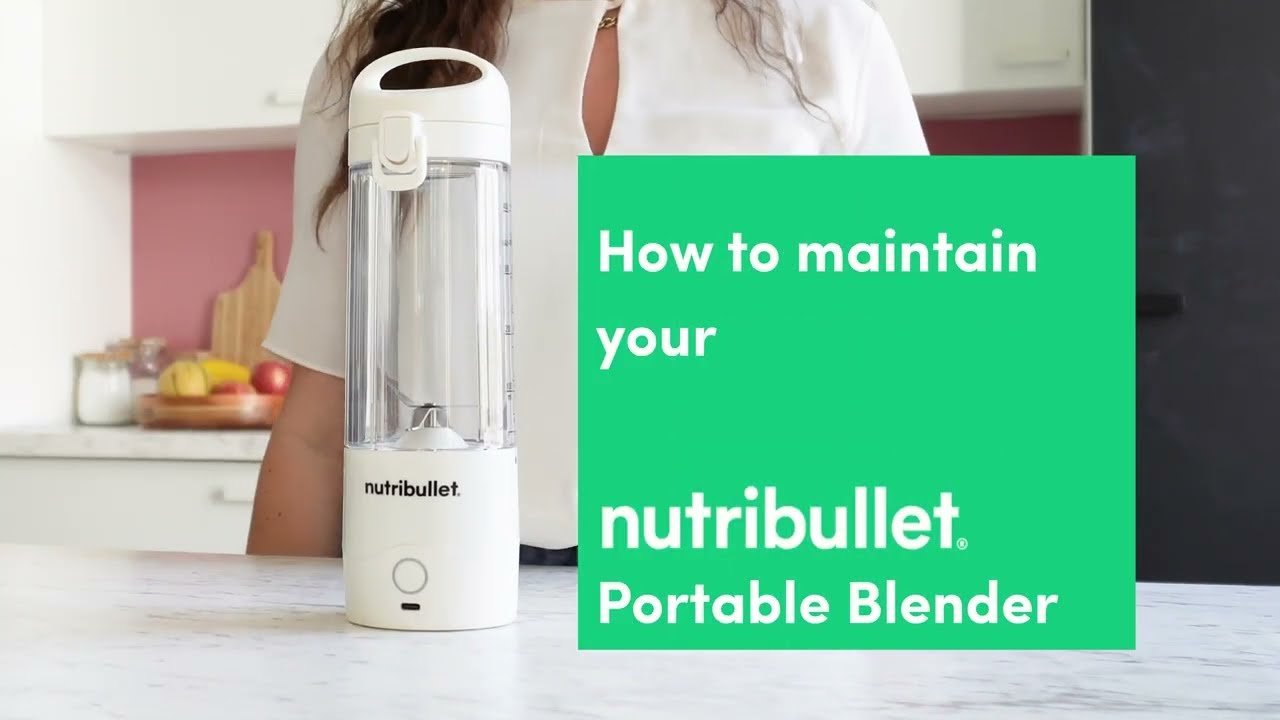
How To Turn Nutribullet Portable Blender Off in Seconds
To turn a Nutribullet portable blender off, you press the same power button you used to start it — one short press stops most models. If yours keeps running, hold the button down for two to three seconds, or twist the cup off the motor base, which cuts power instantly. The main things that change this are your exact model, whether the battery safety lock is on, and whether a stuck blade or thick mix is stopping the motor from responding.
Most people searching this have one of three situations. Some just finished a smoothie and don’t want the battery draining in a bag. Some pressed the button and nothing happened, or it won’t stop. And some are charging it for the first time and aren’t sure what the lights mean.
This page serves all three, but it assumes you have a Nutribullet portable model — the small cup-and-base design that charges by USB, not the full-size countertop blender. If you have the big plug-in Nutribullet, the answer is simpler still: unplug it, and you’re done.
Why your portable blender won’t switch off
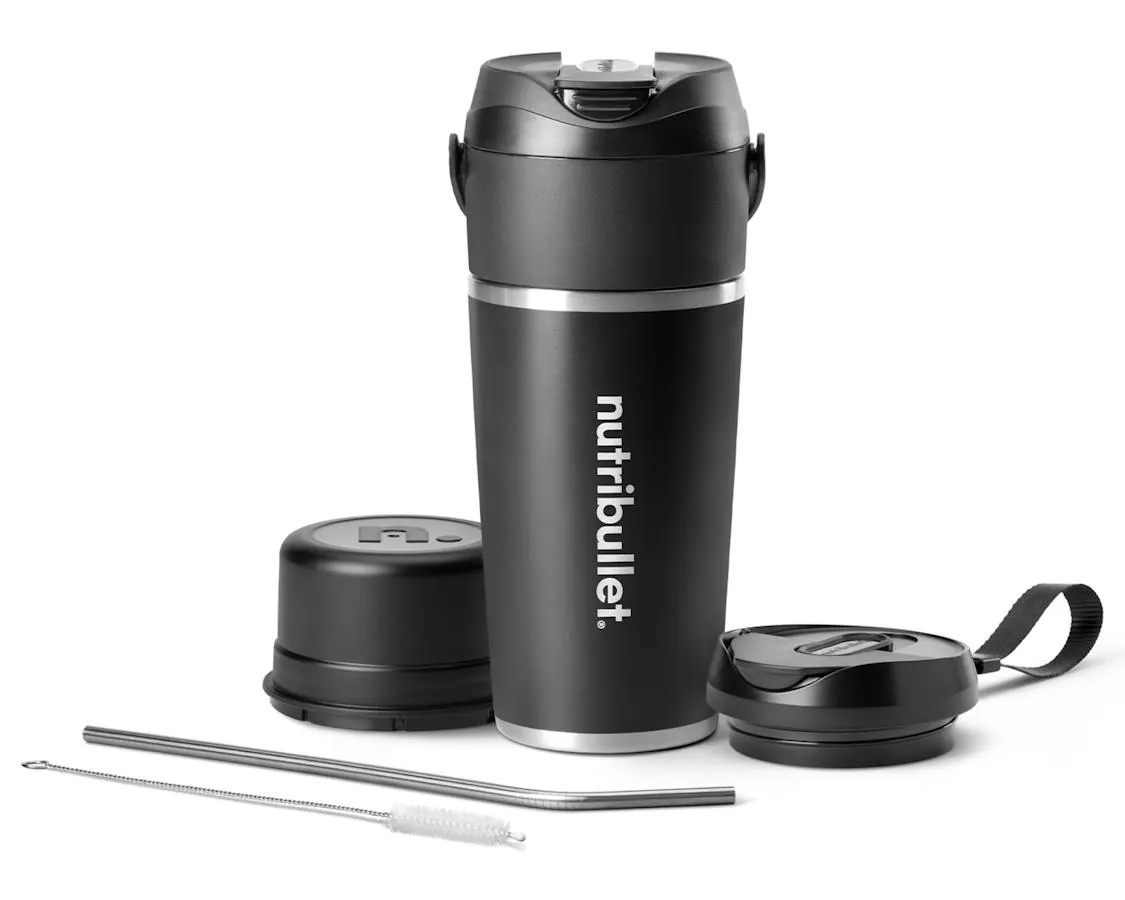
Three things decide how your portable blender behaves when you try to stop it. Get these straight first and the rest of the page falls into place.
The model you own. Nutribullet’s portable blenders have changed over the years, and the button behaviour changed with them. On most current models, one press starts the motor and one press stops it. On some, a short press runs it and you must hold the button down to stop it early. The quickest check: look at the card in the box or find your model on Nutribullet’s support page and read the “operation” line. That one sentence tells you which type you have.
The safety lock. Portable blenders won’t run unless the cup is locked onto the base, and some models won’t respond to the button at all until it clicks into place. If the button does nothing, the lock is usually why — not a dead battery and not a fault.
What’s inside the cup. A thick or jammed mix can stall the blade. When the motor stalls, some models shut themselves down as protection, and the button may feel unresponsive until you clear the cup. This is the one people get wrong most often: they assume the blender is broken, when the mix is simply too thick to turn the blade.
How to switch it off, step by step
Work through these in order. Each step takes seconds, and you’ll know it worked before you move to the next.
- Check the safety lock first. Make sure the cup is fully twisted onto the motor base. If it’s loose, the button won’t respond. You’ll feel it seat, and the light usually comes on when it’s locked.
- Press the power button once. On most Nutribullet portable models, a single press stops the motor immediately. Listen: the blade sound should cut out within a second. If it stops, you’re done — skip the rest.
- If it keeps running, hold the button down for two to three seconds. Some models treat a short press as “start” and a long hold as “stop.” Release and listen again.
- If it still runs, twist the cup off the base. Turn it the same way you’d open a jar, about a quarter turn. This separates the cup from the motor and cuts power instantly. Never put fingers near the blade until you’ve done this.
- Wait for the blade to stop completely. Give it two or three seconds after the sound stops. The blade can spin down after the motor cuts, and you don’t want your hand or a spoon in there while it moves.
- Check the light. A lit or blinking power light means the unit is still awake. On most models it goes dark or stops blinking within a few seconds of shutting off. If it stays lit, repeat step 4.
- Rinse or store. Rinse the cup right away if you’re going to clean it — dried smoothie is far harder to remove. Otherwise, put the blade cover on and store it.
The judgement call that separates a proper stop from one that only looks finished: the blade. A blender that’s silent but still locked with a loaded cup can be bumped into action. If you’re tossing it in a bag or a drawer, take the cup off the base first. That one habit prevents nearly every accidental start.
Different situations, one table
Most people arrive in one of the situations below. Find yours, do the second column, and check the last column before you put it away.
| Your situation | What to do | What it takes | What to watch for |
|---|---|---|---|
| Finished blending, want it off | One press on the power button | 2 seconds | Blade spins down after the sound stops |
| Button press doesn’t stop it | Hold the button 2–3 seconds | 5 seconds | Some models need a long hold, not a tap |
| Button does nothing at all | Check the cup is locked onto the base | 10 seconds | A loose cup locks the controls |
| It won’t stop running | Twist the cup off the base | 5 seconds | Keep fingers clear of the blade |
| It stopped by itself mid-blend | Motor likely stalled; empty and thin the mix | 2–3 minutes | Overloading trips the protection |
| Putting it in a bag | Take the cup off the base first | 10 seconds | Bumping the button can restart it |
| Charging it now | Switch it off before plugging in | 1 minute | Check your manual for the light codes |
What experienced owners do differently
Two habits separate an easy stop from a frustrating one, and both take less time than reading this sentence.
Before you even press start
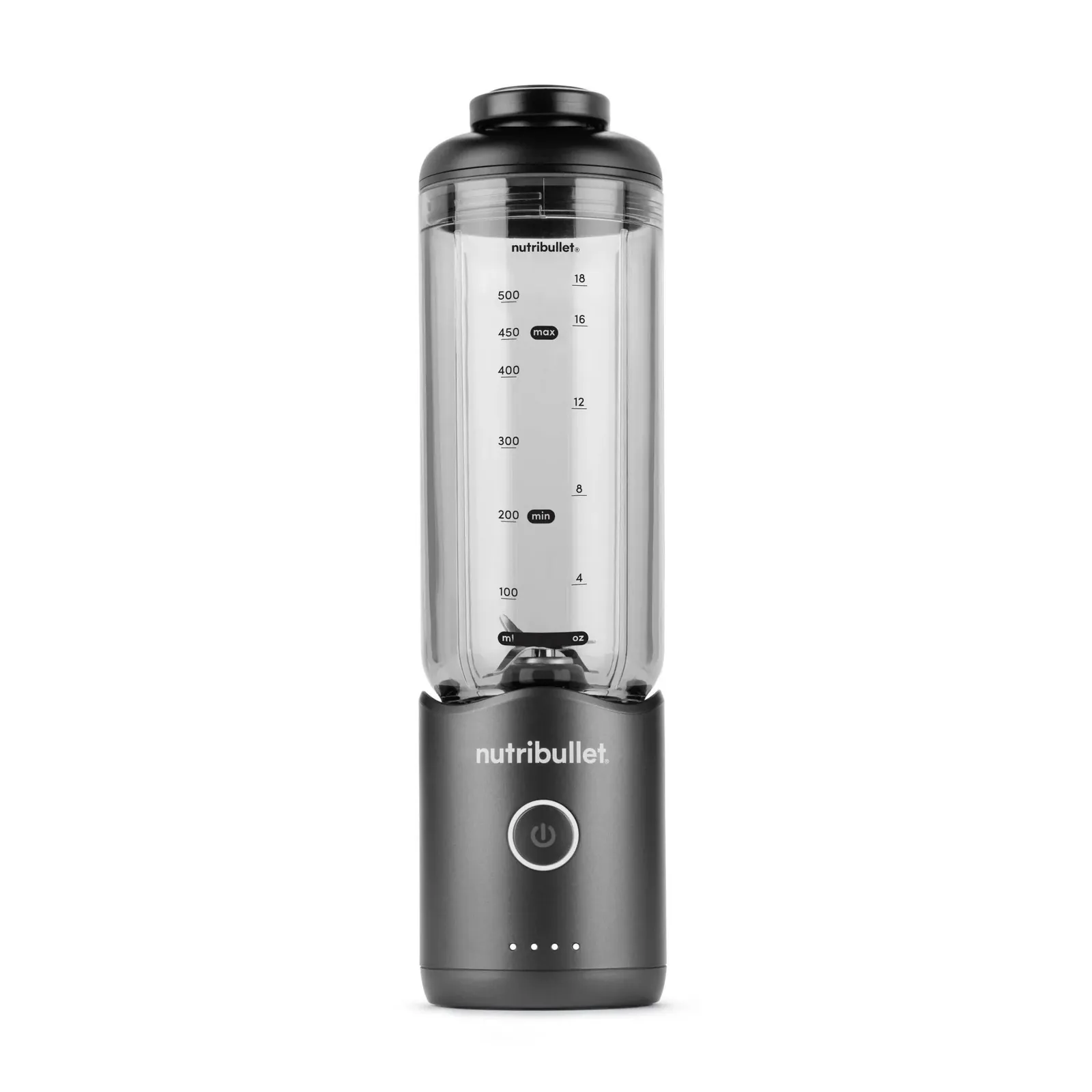
Experienced owners load the cup in a set order: liquid first, then soft fruit, then frozen or hard items on top, and they stop below the max line printed inside the cup.
Liquid first means the blade spins freely from the first second, so the motor never stalls and the stop button always works. They also seat the cup before loading sometimes, because a half-twisted cup is the number one reason a button appears dead. The check is simple: if the light doesn’t respond, untwist and retwist until it clicks.
While it’s running and when you stop
They blend in short bursts — 15 to 20 seconds at a time — rather than one long run. Short bursts mean the motor is never hot or overloaded when you press stop, so it responds instantly. They also stop the blend by sound: when the noise smooths out and stops changing, the mix is done, and pressing the button then takes one press instead of a fight with a stalled motor.
What they deliberately leave alone: they never force a stuck cup off while the motor runs, and they never pry at the blade with a spoon to free a jam. They untwist, add liquid, and try again. The trade-off is real — short bursts take a minute longer overall than one long run, but the motor and battery last far longer for it.
When it won’t behave
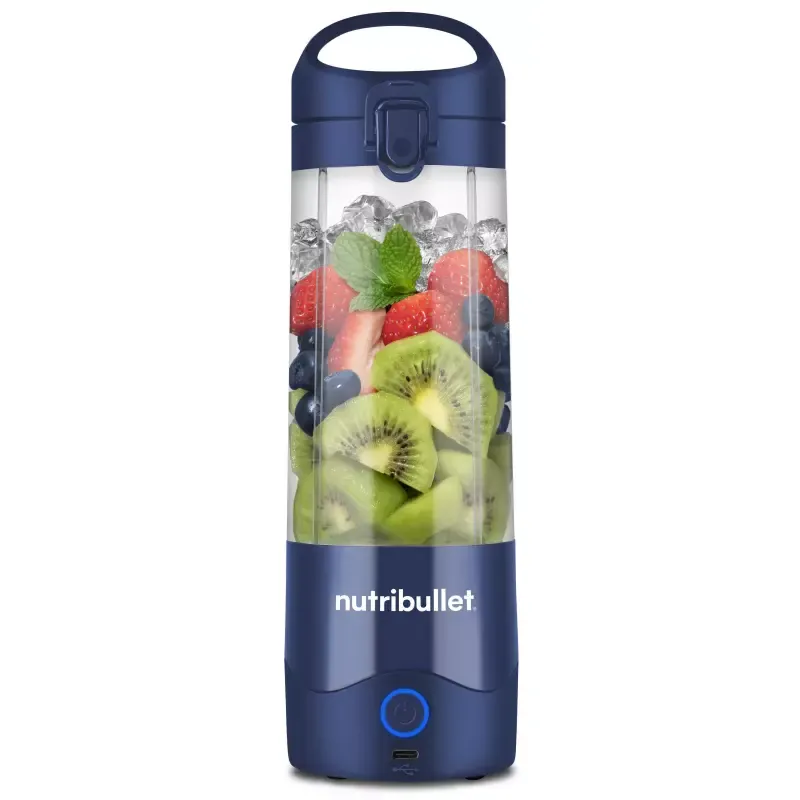
Match what you’re seeing to the row below, do the fix in order, and only move on if the first fix doesn’t work.
| What you notice | What it usually means | What to do first | How to stop it happening again |
|---|---|---|---|
| Button does nothing | Cup not locked, or battery flat | Retwist the cup; if no light, charge it | Lock the cup fully before every use |
| Won’t stop with one press | Your model needs a long hold | Hold 2–3 seconds | Learn your model’s hold-to-stop pattern |
| Stopped mid-blend | Motor overloaded or stalled | Empty half, add liquid, restart | Fill below the max line, liquid first |
| Runs only a few seconds then stops | Battery is low | Charge fully before next use | Don’t store it half-charged in a hot car |
| Light blinks and won’t run | Safety lock or charge state | Recheck the cup seating; consult the manual | Clean the twist threads so they seat fully |
| Burning smell or very hot base | Motor strain — stop using it | Unload it, let it cool, contact Nutribullet support | Shorter bursts, thinner mixes |
That last row is the line: a hot motor base or a burning smell isn’t a do-it-yourself fix. Stop using it and contact Nutribullet’s customer support, because a strained motor or battery is their job, not yours.
The rules that come with the battery
Portable blenders carry a lithium-ion battery, and that battery sets the limits. Nutribullet publishes the exact care instructions for your model on its support pages and in the manual in the box, and those instructions outrank anything here — charge rates, storage advice and light codes differ between models.
The general shape is consistent: don’t charge it unattended overnight on soft furnishings, don’t leave it in a hot car, and don’t submerge the motor base in water, because the battery and electronics sit inside it. Nutribullet also states its blenders are for household use, and using one commercially or modifying it can affect any warranty claim.
If the base is cracked, dented, or has taken a hard drop, stop using it and ask Nutribullet support — a damaged lithium battery isn’t a repair-it-yourself item. A battery that swells, hisses, or smells sweet and chemical is worse still: unplug it, move it to a hard, non-flammable surface away from anything that burns, and contact support rather than charging or using it again.
For storage between uses, a partial charge beats empty. If the blender will sit unused for weeks, charge it partway first rather than leaving it drained, and keep it somewhere cool and dry. Check the manual for your model’s specific guidance.
What it costs you in time and battery
Stopping a Nutribullet portable blender costs you seconds — the press itself is instant, and even the full sequence from running to stored takes under a minute. The real currency is battery life. Every accidental start in a bag drains a charge you didn’t plan for, and most portable models hold enough for roughly a day’s worth of single smoothies per full charge, though that figure depends entirely on your model — check the capacity printed on the box or Nutribullet’s product page for yours.
What moves the cost up: thick mixes that stall the motor, because a stalled motor draws hard on the battery. What moves it down: liquid-first loading and short bursts, which let the motor do the same work for less effort. The habit costs nothing and pays back every charge cycle.
Keeping it working after the job
After you’ve switched it off, the routine is short. Rinse the cup and blade soon after use — dried smoothie on the blade seal is what makes the cup hard to twist later. If something has already dried on, fill the cup halfway with warm water, add a drop of dish soap and run it for a few seconds rather than scrubbing at the blade with a sponge.
Wipe the motor base with a damp cloth only, never under the tap. Store it with the cup off the base and the blade cover on, so a bumped button can’t start it.
The sign that it needs attention: the cup starts feeling stiff to twist, which means residue is on the threads — a quick clean of the threads puts it right without any disassembly. A stiff cup left alone is what eventually strips the threads, and that costs you a whole blade assembly.
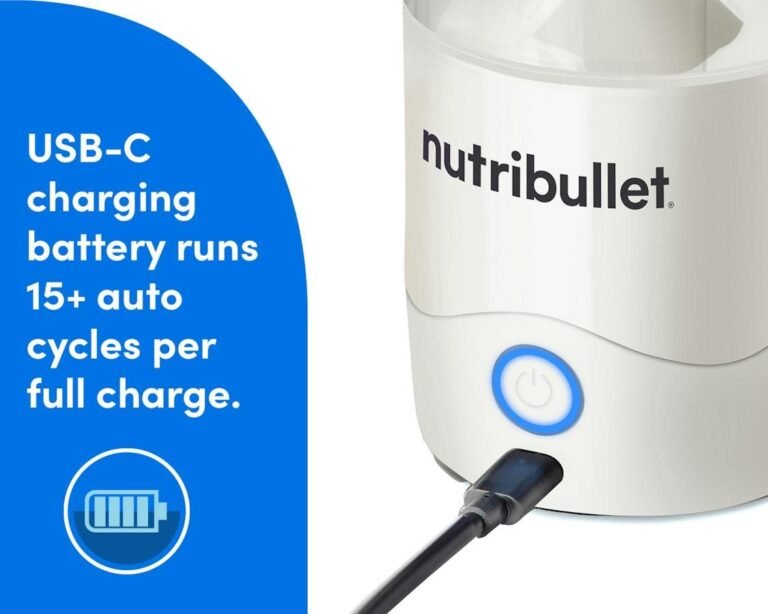
On charging, follow your model’s manual rather than a fixed schedule; the light pattern on your unit is the check that tells you when it’s full. If you won’t use it for a month or more, charge it before storing it — a battery left flat for long stretches is the most common reason these units won’t start in spring.
When a portable blender isn’t the right tool
Some jobs this page covers are the wrong job for a portable blender at all. If your mix regularly stalls the motor — frozen fruit with no liquid, nut butters, ice-heavy drinks — the small motor isn’t built for it, and a full-size countertop blender handles those without strain.
Frozen fruit works if you add liquid first: water, juice, or milk up to about a third of the cup, then the fruit on top. Ice behaves the same way — a few cubes with liquid is fine; ice alone will stall the blades.
If you need to blend hot soup or anything warm, stop: portable blenders are for cold ingredients, and pressure from hot liquid can force the lid off. Blend the soup cold or room-temperature in a countertop model, then heat it in the pot.
And if the motor base is cracked, smells of burning, or has been dropped hard, don’t troubleshoot it yourself — contact Nutribullet support or the retailer you bought it from, because a damaged battery needs proper handling. A swollen base should go nowhere near your household trash; retailers and battery drop-off points take them.
Frequently asked questions
How long does a Nutribullet portable blender keep running before it stops itself?
Most Nutribullet portable models stop automatically after a short run — often around 60 seconds or less — as a motor-protection feature. The exact limit differs by model, so check the card in your box or your model’s page on Nutribullet’s support site for the number that applies to yours.
Can I just unscrew the cup to turn it off?
Yes. Twisting the cup off the base cuts power instantly and is the fastest stop of all. Wait for the blade to spin fully still before you touch anything, and never unscrew it while your fingers are near the blade side.
Is it safe to leave it switched off in my bag?
Only if the cup is off the base or the unit is fully powered down. A locked cup with a live battery can be restarted by a bumped button, and a blade turning loose in a bag is a real hazard. Take the cup off — it takes ten seconds.
Why does my blender turn itself off halfway through a blend?
Almost always a stalled or overloaded motor. Thicker mixes make the blade jam, and the protection circuit cuts power. Empty about half the cup, add more liquid, and restart in short bursts. If it keeps cutting out on thin mixes, the battery is probably low.
What happens if I press the button while it’s charging?
On most models the controls are locked during charging, so nothing happens — which is the safe answer. A few models behave differently, so check your manual’s charging section. As a habit, switch it off before you plug it in either way.
Does it matter if I store it with a full battery?
It matters less than where you store it. Lithium batteries dislike heat far more than any charge level, so a cool drawer beats a hot car at any percentage. For long storage, follow the charge guidance in your model’s manual rather than a general rule.
Can I put the whole blender in the sink to clean it?
No. Only the cup and blade assembly are washable — the motor base holds the battery and electronics and should never be submerged. Wipe it with a damp cloth and keep the charging port dry.
Your first move
Take the cup off the base and put the blade cover on — that’s the whole first step, and it takes ten seconds. Done right, your blender sits quiet in the bag, the light stays dark, and the battery holds its charge until you next want a smoothie.
If the light stays lit or the motor starts on its own after that, stop and contact Nutribullet support before you use it again. A blender that wakes up in a packed bag can burn out its motor or drain the battery flat before you reach your destination.
Check the blade cover is seated straight, not tilted. A crooked cover leaves the blade pins exposed, and those pins are what the base reads to detect the cup. If the light still glows with the cover on, the cover is the problem, not the battery.