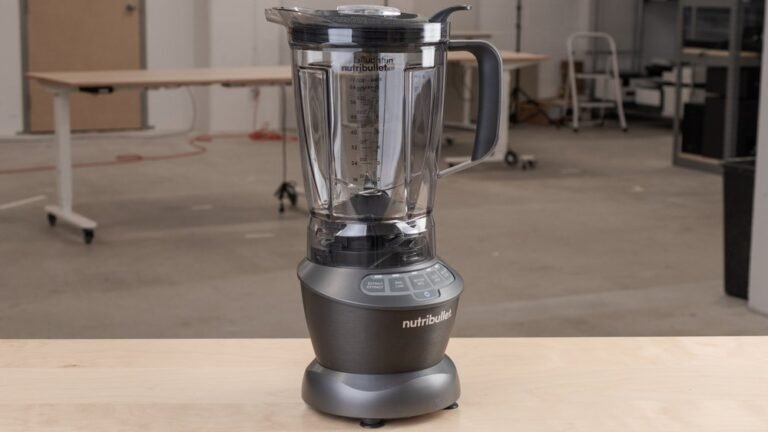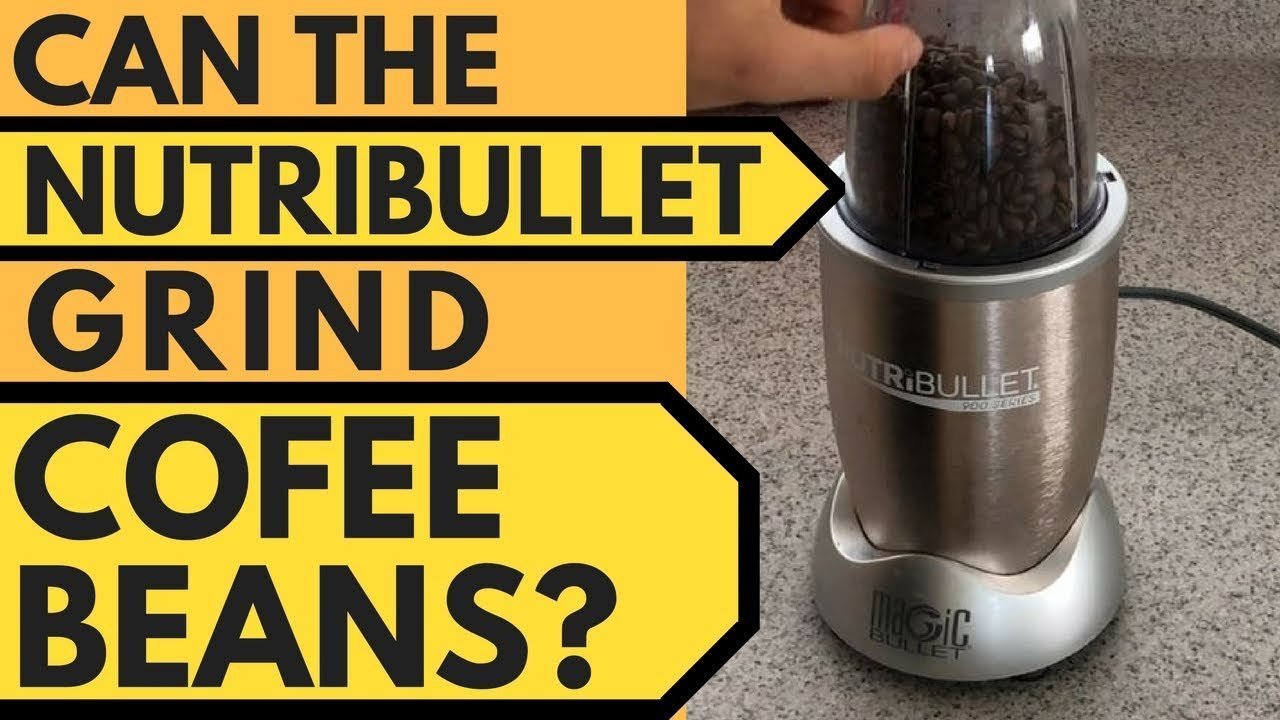
Can Nutribullet Blend Coffee Beans? Yes, With Limits
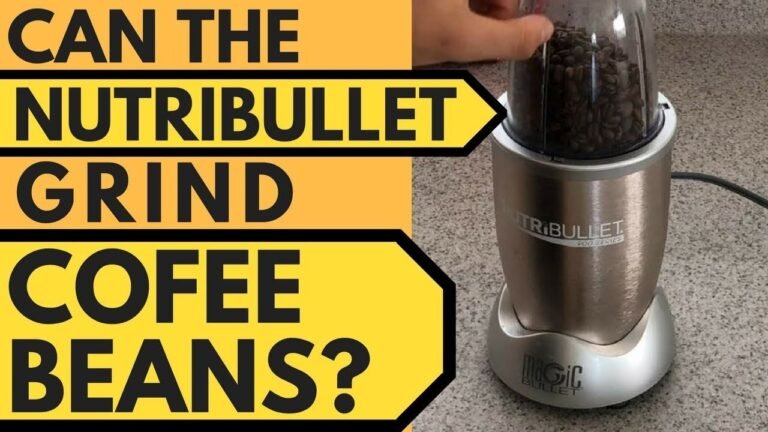
Yes, a Nutribullet can blend coffee beans, but only in small amounts and only if you accept a coarse, uneven grind.
When a Nutribullet works and when it doesn’t
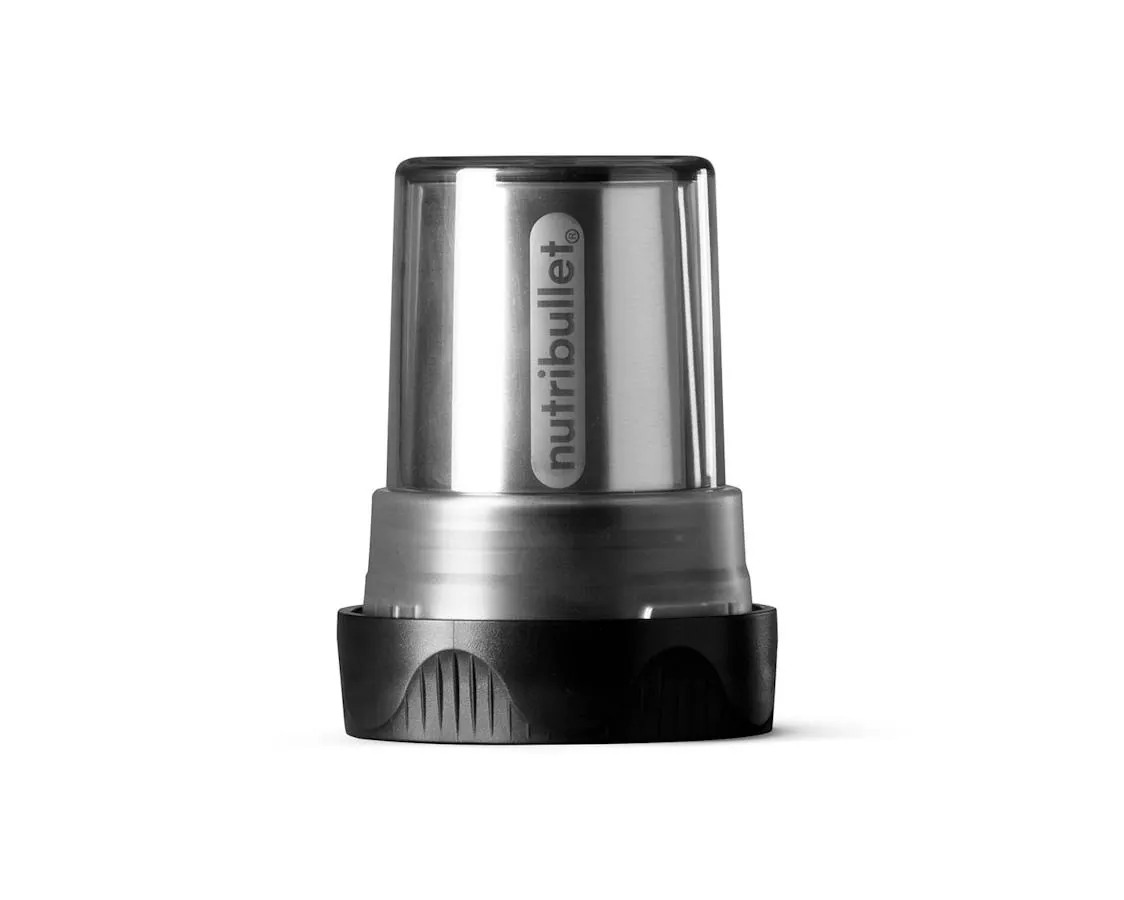
The blade in a Nutribullet is a flat, blunt extractor blade, not a burr grinder. It chops beans into a mix of powder and chunks, and no amount of extra pulsing fixes that. Whether that mix is good enough depends entirely on your brewer.
| Your situation | Answer | Why |
|---|---|---|
| French press or cold brew | Yes | Coarse, uneven grounds still steep fine |
| Moka pot | Usually not | Fine dust clogs the filter holes |
| Drip machine with paper filter | No | Powder slips through, chunks stay dry |
| Espresso machine | No | Needs a consistent fine grind |
| Reusable metal filter basket | Yes, with care | Traps most of the powder |
| You want one cup, right now | Yes | 2 tablespoons takes about 30 seconds |
| You need 12 cups for guests | No | You’d run 6 separate batches |
The pattern is simple. The more your brewer relies on water passing evenly through the coffee, the worse a blender grind performs. French press and cold brew let the grounds sit in water for minutes, so uneven size matters less. Espresso pushes water through in about 25 to 30 seconds, and that needs a grind you can’t get here.
If you’re set on using the Nutribullet anyway, pulse in short bursts of two to three seconds and stop the moment the beans stop moving freely. Let the jar sit for a minute so the dust settles before you open it. That dust is the part that ruins a brew, and it’s also the part that sticks to the lid and the sides.
Grind in smaller amounts than you think you need. A full jar of beans spins unevenly, with the bottom turning to powder while the top stays in halves. Half a jar at a time gives you a more even result and takes barely longer.
For a drip machine, you can rescue the grind by lining the basket with a paper filter and accepting a weaker cup, or by sifting the powder out through a fine kitchen strainer. Sifting costs you a few minutes and some coffee, but it turns an undrinkable cup into a passable one.
Store what you grind in an airtight jar and use it within a few days. The powder goes stale faster than the chunks, so an old batch tastes flat even when the grind was fine.
If you drink espresso or use a moka pot daily, a blender is the wrong tool and no technique will change that. A burr grinder is the fix, and a hand grinder costs less than most people expect.
What actually decides the answer
Ground size consistency is the whole question, and a blender can’t give it to you. A burr grinder crushes beans between two surfaces set a fixed distance apart, so every particle comes out close to the same size.
A Nutribullet’s blade spins and hits beans at random. Some beans shatter into dust, others crack in half and never touch the blade again. That’s the mechanism, and it’s why the same 2 tablespoons can brew well in one method and badly in another.
Bean hardness matters too, but less than people think. Dark roasts are more brittle and break down faster. Light roasts are denser and often leave more whole chunks after the same 30 seconds. Neither one gets you a consistent grind. If your beans are light roasted, add 10 seconds of pulsing and expect more chunks, not fewer.
The other deciding factor is heat. Blades spin fast and warm the coffee. Coffee releases its best aromatics at room temperature and loses them when heated, which is why grinding in small bursts of 5 to 10 seconds, with a pause between, beats one long run. A 30-second continuous blend leaves the grounds warm to the touch, and that warmth is flavor leaving the cup.
How much coffee you load changes the outcome as much as the machine does. Two tablespoons in a wide jar mostly bounce off the walls and never reach the blade, so you get boulders and powder in the same scoop. Fill the jar to roughly a third and the beans feed into the blades instead of flying past them.
Stop and shake the jar every few pulses. Grounds pack against the sides and the blade starts spinning in a pocket of air, which is where the unevenness gets worse, not better.
If your brewer steeps grounds in water for 4 minutes or more, blend away in 2-tablespoon batches; if your brewer forces water through the coffee in under a minute, don’t blend, buy pre-ground or get a burr grinder.
How to grind beans in a Nutribullet
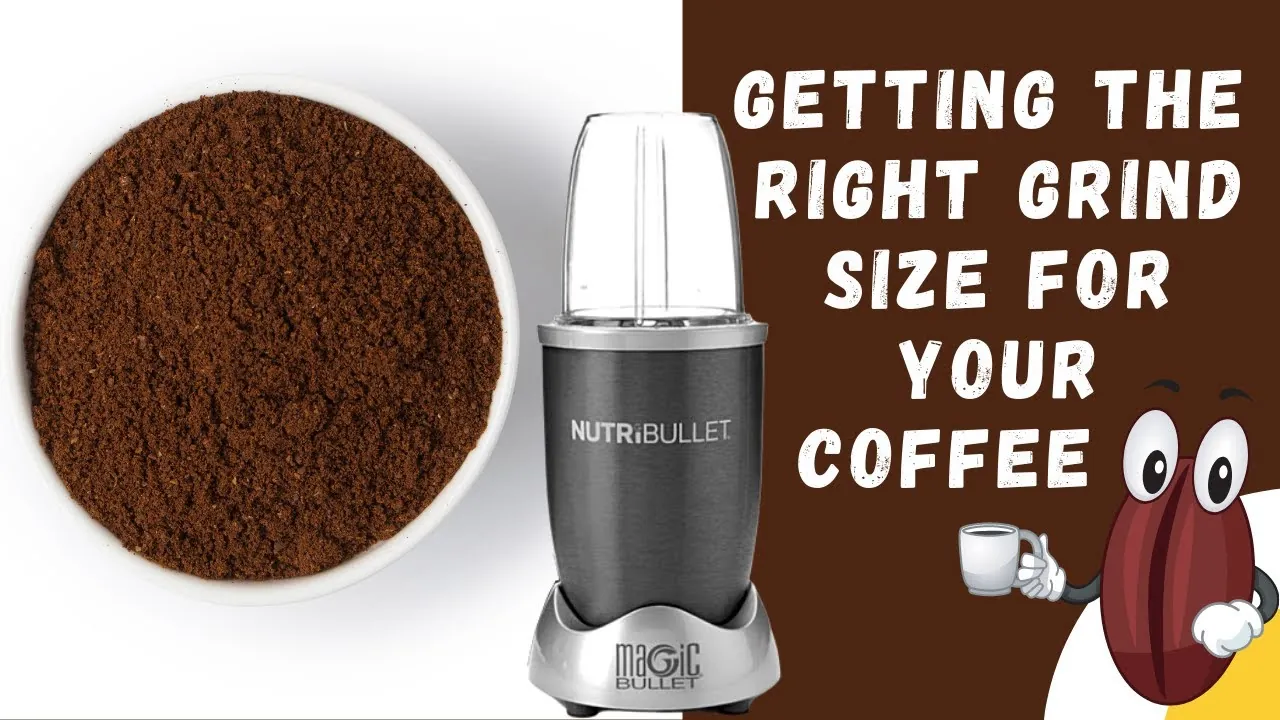
Work in small batches and stop before the motor strains. Two tablespoons of beans is the sweet spot for a standard Nutribullet cup. More than that and the blades can’t reach the bottom layer, so you get whole beans sitting under powder. Here’s the sequence that gives the most even result.
Add 2 tablespoons of beans to a dry cup. No more than that per batch. Shake the cup so the beans sit in a single layer on the blade. If you hear beans rattling around untouched after 10 seconds, you’ve overloaded it.
Pulse in 5-second bursts, 4 to 6 times. Hold the cup down, release, shake, repeat. The pause lets the grounds settle back onto the blade. You’re done when most of the load looks like coarse sand, not when it looks like flour.
Shake between every burst. This is the step people skip, and it’s the one that decides whether you get chunks. A quick shake re-drops the big pieces into the blade path.
Stop at 30 seconds total. Past that, the grounds get warm and the fines turn to paste that sticks to the cup walls. Warm grounds brew bitter.
Sift out the dust if you’re using a French press. Pour the grounds through a fine kitchen strainer and keep what stays on top. The powder that falls through is what makes a muddy cup.
Clean the cup right away. Coffee oils harden fast. Rinse with warm water and a drop of dish soap, then blend the soapy water for 5 seconds. That gets the residue out of the blade base without scrubbing.
The sign it worked: your grounds look like coarse sand with a few bigger pieces, and they’re cool to the touch. If they’re warm and clumping, you ran it too long.
The mistake that ruins the cup
Running the blender until the beans look like powder is the most common error, and it costs you the cup. People see whole beans after 10 seconds, assume it needs longer, and keep going for a full minute. What they get is a mix of fine dust and heat.
In a French press, that dust passes through the mesh and leaves grit in every sip. In a drip machine, it clogs the paper and the water backs up, so the brew takes twice as long and tastes burnt.
The cost is real: you’ve spent money on beans and time on the grind, and the coffee still tastes wrong. Then people blame the beans or the brewer.
The check that avoids all of it’s simple. After 20 seconds, scoop a pinch between your fingers. If it feels like coarse sand, stop. If it feels like flour, you’ve already gone too far, and that batch is best used for cold brew, where the fines settle to the bottom of the jar overnight and you can pour off the clear coffee above them.
Blade grinders make this worse than burr grinders, and it’s worth knowing which one you own. A blade spins and chops, so some fragments shatter while others stay whole, and no amount of shaking the jar evens that out.
A burr crushes every bean to the same gap setting, so the result is uniform by design. If you have a blade, pulse in 3-second bursts and shake the jar between them. If you have a burr, set the gap and leave it alone.
Stop the moment the texture is right, not the moment the color is right. Color tells you almost nothing, because dark roasted beans look dark at every grind size.
One more thing: don’t grind more than you’ll brew in 2 days. Ground coffee loses its aroma quickly once the surface area is exposed to air, which is why whole beans keep so much longer.
When to stop and buy a grinder
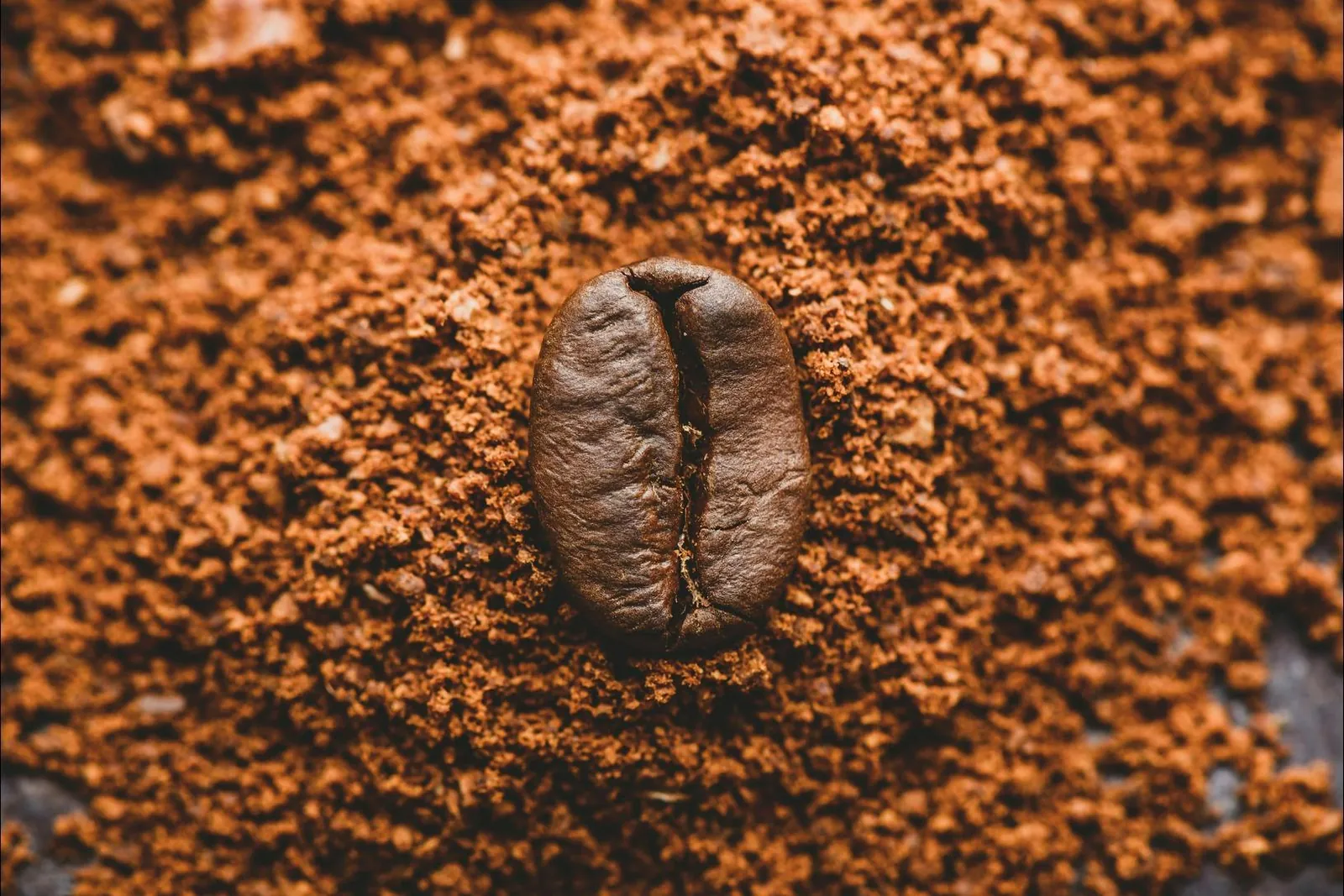
Three signs say this isn’t a blender job anymore. If your espresso shots run in under 15 seconds or taste sour and thin, the grind is too coarse and no amount of pulsing will fix it, because espresso needs a burr grinder set to a specific size.
If your drip coffee comes out weak on top and bitter at the bottom of the pot, the particle sizes are too spread out for a paper filter. If your machine’s motor smells hot or the cup gets too warm to hold, you’re pushing a kitchen blender past what it’s built for.
A burr grinder handles all three, and it’s the tool that belongs to this job. If you only brew French press or cold brew a few times a week, the Nutribullet is fine and you don’t need to spend anything.
If you’re chasing a consistent cup, or you’ve moved to espresso, that’s a different piece of equipment and a different budget.
One more test settles it. Grind a tablespoon as fine as the blender will go and rub it between your fingers. If it feels like sand, with grains you can count, you’re getting a mix of dust and pebbles, and a paper filter will pass the dust while the pebbles sit in the basket. If it feels like flour, the blender is doing better than most, but it still can’t repeat that tomorrow.
The mistake people make here is buying a cheap blade grinder to bridge the gap. It costs about as much as two bags of good beans and leaves you with the same uneven bed, just louder. Put that money toward beans and save for a burr grinder instead.
If you drink one cup a day and mostly with milk, stay where you are. If you’ve started weighing your beans, buy the grinder before the next bag.
Frequently asked questions
Can you grind coffee beans in a Nutribullet?
Yes, in batches of 2 tablespoons or less, pulsed in 5-second bursts for about 30 seconds total. You’ll get a coarse, uneven grind that works for French press and cold brew. It won’t work for espresso or a drip machine with a paper filter, because those need a consistent particle size that a blade can’t produce.
How long does it take to grind coffee beans in a blender?
About 30 seconds of total blending time, broken into 4 to 6 pulses of 5 seconds each. That assumes 2 tablespoons of beans and a standard Nutribullet cup. A larger batch needs more time but won’t grind evenly, because the blades can’t reach the top layer. Keep batches small instead of blending longer.
Is it safe to put coffee beans in a Nutribullet?
Yes, for the machine and for you. Coffee beans are softer than ice or nuts, which these blenders handle. The risk is heat, not damage: running it continuously for a minute warms the grounds and dulls the flavor. Pulse instead, and let the motor rest between bursts so it doesn’t overheat.
Why does my blender leave whole beans in the mix?
Because you’ve added too many beans for the blades to reach. With more than 2 tablespoons, the top layer never touches the blade. Shake the cup between pulses to drop the big pieces back down, and if whole beans still survive after 6 pulses, scoop out half and grind in two smaller batches.
What happens if I use blender-ground coffee in a drip machine?
The water slows down and the brew turns bitter. Fine dust clogs the paper filter, so water sits on top of the grounds instead of flowing through at the normal rate. The result is an uneven extraction: weak at the start, harsh at the end. Use a French press or cold brew for blender grounds instead.
Does it matter if my beans are dark or light roasted?
Yes, it changes the time. Dark roasts are more brittle and break down in about 20 to 25 seconds of pulsing. Light roasts are denser and often need the full 30 seconds, and they still leave more chunks. Either way, stop when the grounds feel like coarse sand and are cool to the touch.
Can I grind coffee beans for espresso in a Nutribullet?
No. Espresso needs a fine, consistent grind so water passes through in about 25 to 30 seconds at pressure. A blade produces a mix of dust and chunks, so the shot either chokes or runs through in a few seconds. For espresso, use a burr grinder or buy coffee ground for espresso.
How many cups of coffee can I make from one batch?
One batch of 2 tablespoons makes about 1 cup of brewed coffee, or 6 ounces. A standard 12-cup pot needs roughly 12 tablespoons, which means 6 separate blending batches and about 3 minutes of work.