Can You Blend Coffee In A Nutribullet? Yes, Here’s How
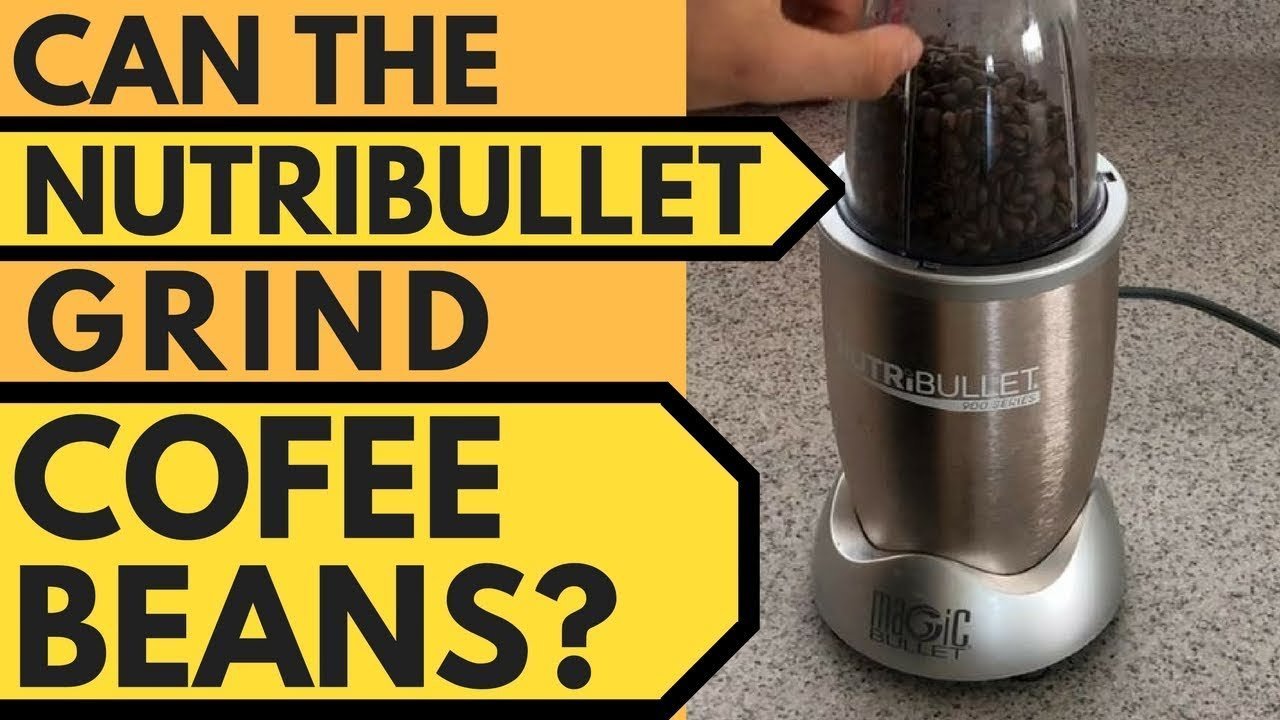
Yes, you can blend coffee in a Nutribullet, and the result depends entirely on which kind of coffee you’re making. A Nutribullet will grind whole beans into a usable coarse or medium grind for drip and French press, and it will turn instant coffee and ice into a decent frappe. What it won’t do is produce the fine, consistent espresso grind that a burr grinder delivers.
Key Takeaways
- A Nutribullet handles coarse and medium grinds well enough for drip machines, French presses, and cold brew.
- Use the flat milling blade, not the extractor blade, for dry beans — the extractor blade is designed for liquid and will fling beans instead of crushing them.
- Grind in short pulses of 2-3 seconds, shaking between pulses, to avoid heat buildup that makes coffee taste bitter and burnt.
- Expect inconsistency: a blade grinder produces a mix of powder and chunks, which is fine for immersion brewing but poor for espresso.
- You can absolutely blend instant coffee, ice, milk, and syrup in a Nutribullet to make a frappe or iced coffee drink.
- Never fill the cup more than one-third full of beans, and let the motor rest between batches to protect it.
Can You Blend Coffee In A Nutribullet?
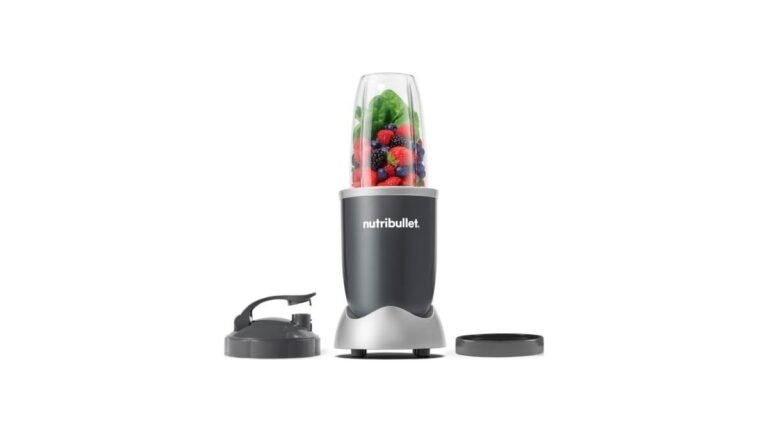
The short answer is yes, with caveats. A Nutribullet is a high-speed blender with a small cup and a powerful motor, usually somewhere between 600 and 1200 watts depending on the model. That power is genuinely enough to crack coffee beans into fragments. The problem isn’t power — it is particle consistency.
A burr grinder crushes beans between two surfaces set at a fixed distance, so every particle comes out roughly the same size. A blade grinder smashes beans against the cup walls at random. The result is a wide particle distribution: some dust, some gravel. For most home brewing methods, that’s survivable. For espresso, it’s a dealbreaker, because espresso requires a narrow, fine, uniform grind to build pressure.
So the honest framing is this: a Nutribullet is a workable blade grinder substitute, not a replacement for a real grinder. If you already own one and want coffee today, it works. If you’re shopping specifically for grinding equipment, a $40 burr grinder will beat it every time.
Which Nutribullet Models Work Best
Not all Nutribullets are equal for dry grinding. The key variables are motor wattage and whether the model ships with a milling blade.
| Model | Typical Wattage | Milling Blade Included | Dry Grinding Verdict |
|---|---|---|---|
| NutriBullet 600 | 600W | Yes | Workable for coarse grinds, small batches |
| NutriBullet Pro 900 | 900W | Yes | Good for medium grinds, faster and more even |
| NutriBullet Pro 1000 | 1000W | Yes | Best of the standard lineup for dry beans |
| NutriBullet RX | 1700W | Yes | Powerful but overkill; heat risk is higher |
| NutriBullet Magic Bullet | 250W | Yes | Marginal — expect very uneven results |
| NutriBullet Blender Combo | 1200W | Yes | Strong, but full-size pitcher is awkward for small batches |
The pattern is simple: more wattage means faster grinding, which means less time for heat to build. But more wattage also means you can accidentally turn beans into dust in three seconds. The sweet spot for dry coffee is the 900W to 1000W range.
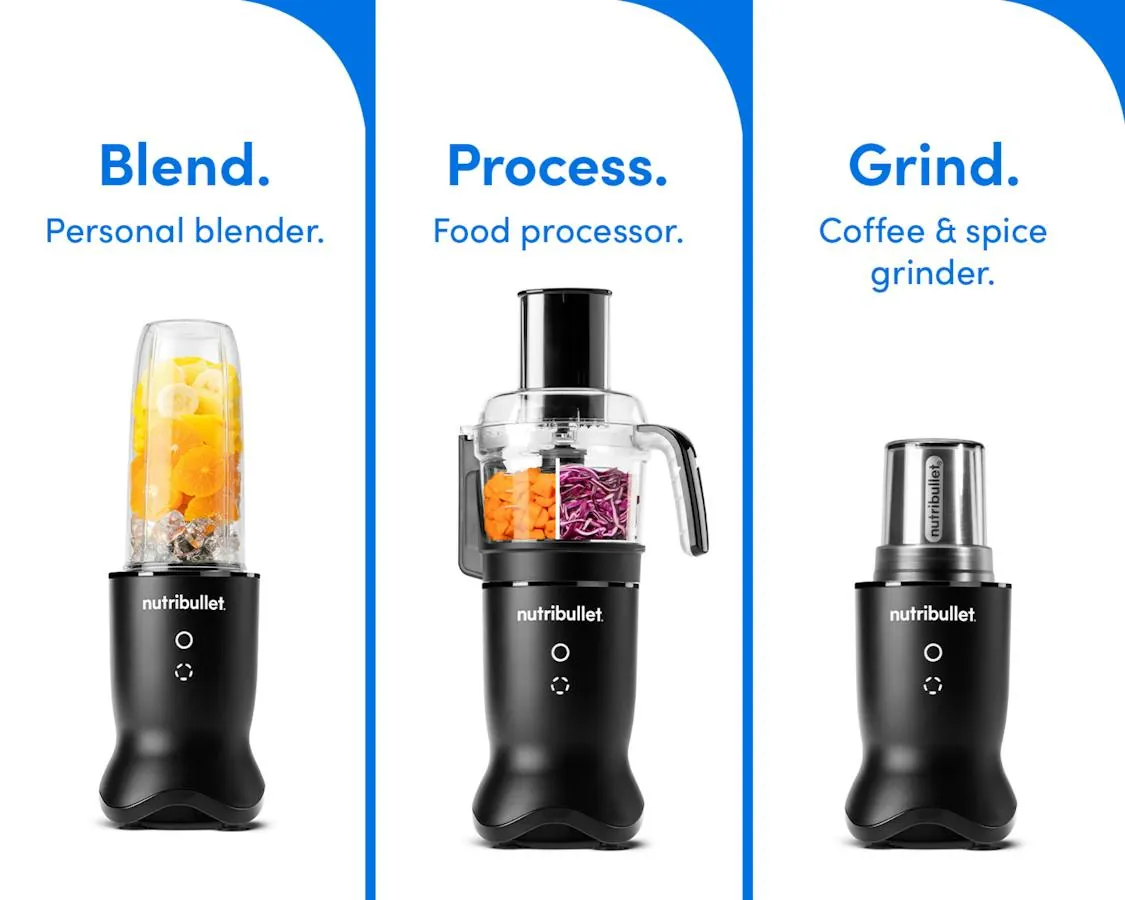
The milling blade — sometimes sold as the “flat blade” or “grinding blade” — is a flat, two-pronged blade with no upward curve. It’s designed to pulverize dry goods like grains, nuts, and spices. The extractor blade has angled, curved blades that create a vortex for liquids. Using the extractor blade on dry beans mostly throws them around the cup.
Step-By-Step: Grinding Beans
Follow this sequence and you’ll get a usable grind without scorching the coffee or the motor.
- Fit the milling blade into the blade base. If you only have an extractor blade, you can still proceed, but expect a coarser, more uneven result.
- Add beans to the cup. Fill no more than one-third of the cup. For a standard 24-ounce short cup, that’s roughly 2 to 3 ounces of beans, which yields about 4 to 6 tablespoons of ground coffee.
- Seal the cup onto the blade base and lock it onto the motor base.
- Pulse, don’t run continuously. Press down for 2 seconds, release, wait 2 seconds. Repeat.
- Shake between pulses. Unlock, shake the cup in a circular motion, relock. This redistributes the larger chunks back into the blade path.
- Stop at 10 to 15 total pulses for a coarse grind, 20 to 25 for medium. The total run time should stay under 30 seconds.
- Let the motor rest for at least one minute before grinding another batch.
- Empty the cup immediately and wipe it out. Ground coffee oils go stale and leave residue that flavors your next smoothie.
Pro Tip: Grind in the smallest batches you can tolerate. Two small batches always beat one big batch, because the blade needs room to move beans around. An overcrowded cup just spins the bottom layer into powder while the top stays whole.
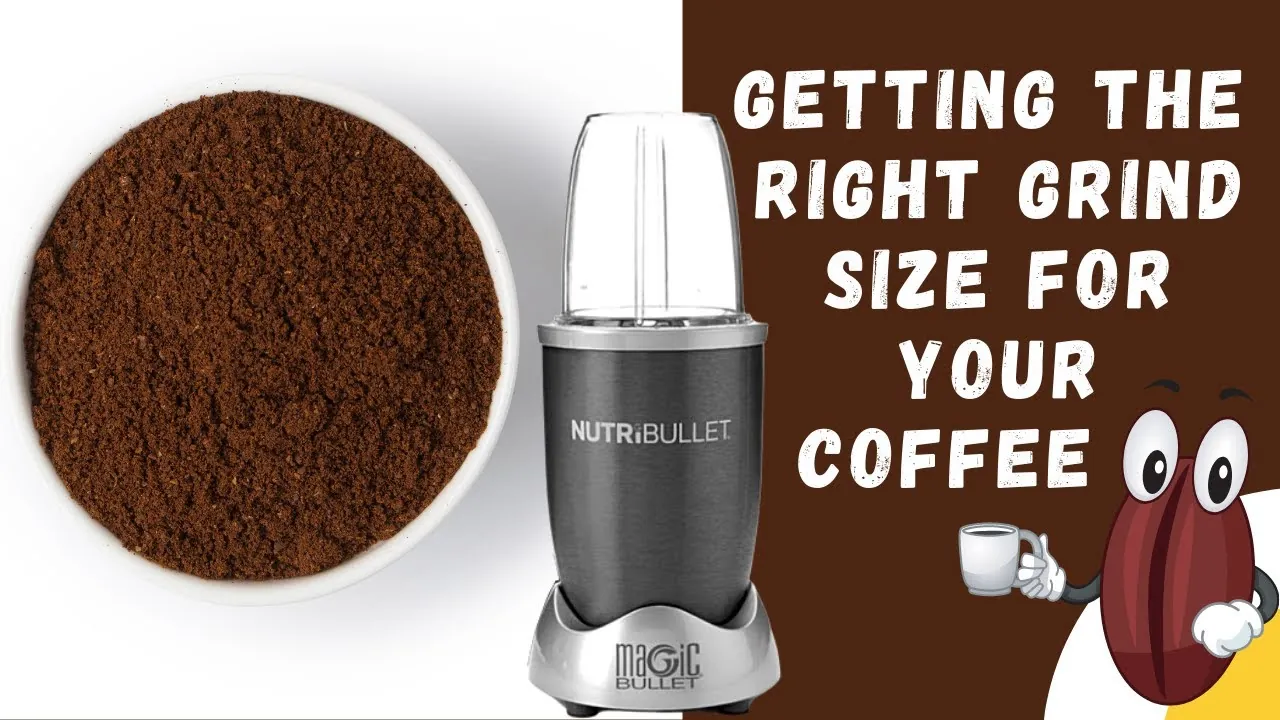
How To Get The Right Grind Size
You can’t dial in a blade grinder the way you dial in a burr grinder, but you can steer it with time and pulse count. Here is a practical reference.
| Brew Method | Target Grind | Pulse Count | Nutribullet Suitability |
|---|---|---|---|
| French press | Coarse | 8-12 | Good |
| Cold brew | Coarse | 8-12 | Good |
| Drip machine | Medium | 15-20 | Acceptable |
| Pour-over | Medium-fine | 20-25 | Marginal |
| Aeropress | Medium-fine | 20-25 | Marginal |
| Moka pot | Fine | 25-35 | Poor |
| Espresso | Very fine | 35+ | Not recommended |
The reason espresso fails isn’t just fineness — it is consistency. Espresso needs every particle to be roughly the same size so water flows through the puck at a predictable rate. A blade grinder produces fines that clog the puck and boulders that let water channel through. You get a shot that’s simultaneously sour and bitter.
If you’re brewing with a French press or cold brew, the coarse grind is forgiving. Bigger particles just need more time. That’s why a Nutribullet is genuinely useful for those two methods and genuinely frustrating for espresso.
Making Blended Coffee Drinks
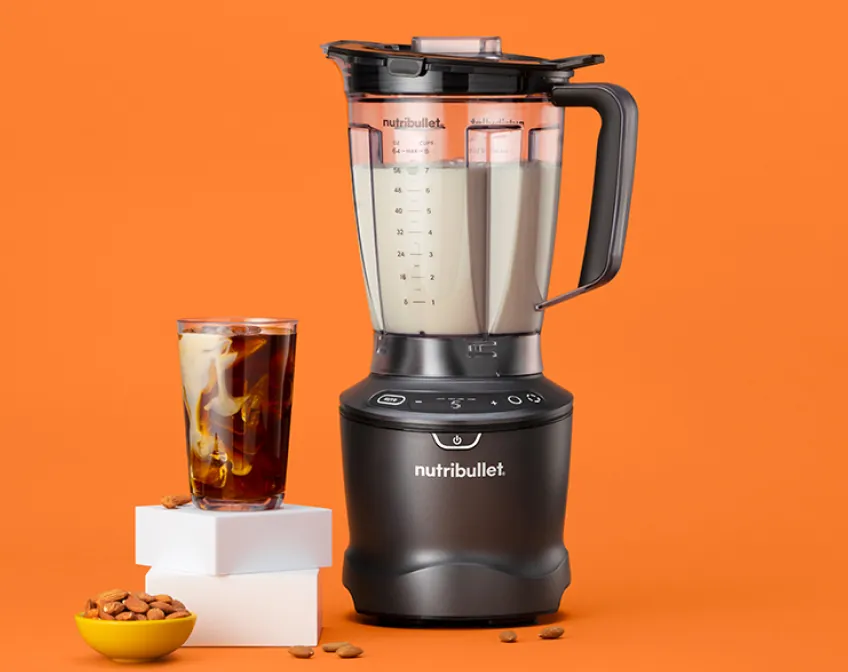
This is where the Nutribullet actually shines, because it was designed for exactly this. Blended coffee drinks need a vortex, and the extractor blade creates one.
For a frappe or blended iced coffee:
- Add 1 cup of cold coffee or 2 shots of cooled espresso to the cup.
- Add 1 cup of ice cubes.
- Add 1/2 cup of milk, oat milk, or cream.
- Add 1 to 2 tablespoons of sugar, honey, or flavored syrup.
- Optional: 1 tablespoon of instant coffee powder for a stronger kick.
- Blend for 20 to 30 seconds until smooth.
For a coffee smoothie, swap the ice for a frozen banana, add a scoop of protein powder, and use cold brew concentrate instead of brewed coffee. Blend 30 to 40 seconds.
For a bulletproof-style blended coffee, combine hot brewed coffee, 1 tablespoon of butter or ghee, and 1 tablespoon of MCT oil. Blend 20 seconds. Be careful with hot liquids — see the warning below.
Warning: Hot liquids in a sealed blender cup build pressure and can blow the lid off. If you’re blending hot coffee, vent the cup by pulsing briefly with the lid slightly loose, or let the coffee cool to warm before sealing. Never fill a cup more than halfway with hot liquid.
Common Problems And Fixes
| Problem | Likely Cause | Fix |
|---|---|---|
| Beans stay whole at the top | Cup overfilled | Fill only one-third, shake between pulses |
| Coffee tastes burnt or bitter | Over-grinding, heat buildup | Reduce pulse count, rest the motor |
| Grind is powdery and muddy | Too many continuous seconds | Use shorter pulses, coarser target |
| Blade spins but nothing moves | Extractor blade used on dry beans | Switch to the milling blade |
| Motor smells hot | Batch too large, no rest time | Halve the batch, rest 2 minutes between runs |
| Grounds stuck in the cup corners | Static and oils | Let it sit 30 seconds, then tap the cup |
The single most common mistake is running the machine continuously. A Nutribullet motor isn’t designed for a 60-second continuous dry run. It will heat the beans, heat the cup, and heat itself. Pulsing isn’t a suggestion — it’s the technique.
Limits Of A Nutribullet Grinder
Be clear-eyed about what you’re giving up.
- No adjustability. You can’t set a number and get the same grind twice. Every batch is a guess.
- No consistency. Fines and boulders always coexist.
- Heat damage. Fast blades generate friction heat, which drives off aromatic compounds.
- Small capacity. You’re grinding enough for one or two cups at a time.
- Motor wear. Coffee beans are hard. Regular dry grinding shortens motor life compared to blending soft fruit.
- Static cling. Ground coffee sticks to the cup walls, especially in dry climates.
If you drink espresso, pour-over, or you’re chasing clarity and sweetness in a light roast, buy a burr grinder. A hand burr grinder like the Hario Skerton or a budget electric like the Baratza Encore will outperform a Nutribullet on coffee every single day, and the difference isn’t subtle.
If you drink French press, cold brew, or blended drinks, the Nutribullet is fine. Use it without guilt.
Cleaning And Maintenance
Ground coffee leaves oils that go rancid and taint everything you blend afterward. Clean immediately.
- Empty the cup and tap out loose grounds.
- Add warm water and a drop of dish soap.
- Blend for 10 seconds with the extractor blade, or scrub with a bottle brush if using the milling blade setup.
- Rinse thoroughly and air dry upside down.
- Wipe the motor base with a damp cloth — never submerge it.
Pro Tip: Once a week, blend a paste of baking soda and water for 15 seconds to lift coffee oils from the plastic. Plastic cups stain and hold odor more than glass, so this matters more than you would think.
Don’t put Nutribullet cups or blades in the dishwasher unless the manufacturer explicitly says they’re dishwasher-safe. Heat can warp the plastic threads and cause leaks.
Alternatives Worth Considering
If grinding coffee is going to be a daily habit, here is how the options compare.
| Option | Typical Cost | Grind Quality | Best For |
|---|---|---|---|
| Nutribullet (owned) | $0 extra | Low-medium | French press, cold brew, frappes |
| Hand burr grinder | $30-$60 | High | Pour-over, Aeropress, travel |
| Budget electric burr grinder | $100-$170 | High | Daily drip and pour-over |
| Premium electric burr grinder | $200-$500 | Very high | Espresso, single-dose brewing |
| Blade grinder (dedicated) | $20-$40 | Low | Same as Nutribullet, no better |
| Pre-ground coffee | $8-$15 per bag | Depends on roaster | Anyone without a grinder |
Notice that a dedicated blade grinder isn’t an upgrade over your Nutribullet. It’s the same technology in a different housing. If you’re going to spend money, spend it on burrs.
Pre-ground coffee from a good roaster is also a legitimate answer. It stales faster than whole bean, but if you buy small bags and drink them within two weeks, it beats a bad grind from a blade.
Tips For Better Results
- Grind right before brewing. Ground coffee loses aroma within minutes. This is the single biggest quality lever you control.
- Use fresh beans. Beans roasted within the last two to four weeks grind more evenly than stale ones, which have dried out and hardened.
- Freeze beans for 10 minutes before grinding if you want a slightly more even result. Cold beans are more brittle and shatter rather than smear.
- Sift out the fines with a kitchen strainer if you’re brewing pour-over. It takes 30 seconds and noticeably improves the cup.
- Keep a dedicated cup for coffee so your smoothies don’t taste like roast.
- Store grounds in an airtight container away from light and heat if you must grind ahead.
Warning: Don’t grind flavored beans in a cup you use for other things unless you clean it aggressively. The oils linger and will show up in your next smoothie.
Related guides
- Can You Blend Coffee Beans in a Nutribullet Blender?
- Can Nutribullet 900 Blend Frozen Fruit? Yes, With Limits
- Can a Nutribullet Blend Nuts? Yes, With the Right Method
Frequently Asked Questions
Can you grind coffee beans in a Nutribullet?
Yes. Use the milling blade, fill the cup no more than one-third full, and pulse in 2-second bursts with shaking between pulses. You’ll get a coarse-to-medium grind suitable for French press, cold brew, and drip. It won’t produce espresso-quality fine grind.
Do you need a special blade to grind coffee?
A milling blade, also called a flat blade or grinding blade, works best. It crushes dry goods instead of creating a liquid vortex. If you only have the extractor blade, it will still work, but the grind will be coarser and less even.
How long should you blend coffee beans?
Ten to fifteen pulses of 2 seconds each for a coarse grind, up to 25 pulses for medium. Total run time should stay under 30 seconds. Running continuously overheats the beans and the motor, which makes the coffee taste burnt.
Can a Nutribullet grind coffee fine enough for espresso?
No. Espresso requires a very fine, highly consistent grind, and a blade grinder produces a mix of powder and chunks. The result is channeling, uneven extraction, and a shot that tastes both sour and bitter. Use a burr grinder for espresso.
Can you make a frappe in a Nutribullet?
Yes, and it works very well. Combine cold coffee, ice, milk, and sweetener, then blend 20 to 30 seconds with the extractor blade. Add instant coffee powder for a stronger flavor. This is the Nutribullet’s strongest use case for coffee.
Will grinding coffee damage my Nutribullet?
Occasional grinding is fine. Daily dry grinding of hard beans will wear the motor faster than blending soft ingredients, and it may void your warranty if the manual prohibits dry grinding. Check your manual, keep batches small, and rest the motor between runs.
Is a Nutribullet better than a burr grinder for coffee?
No. A burr grinder produces a consistent particle size, which is the single most important factor in coffee quality. A Nutribullet is a convenience substitute when you already own one. For espresso, pour-over, or any method where clarity matters, a burr grinder wins clearly.
Conclusion
If you want to try this today, start with a small batch of beans, use the milling blade, and pulse in short bursts with a shake in between. Taste the result in a French press first, since that method forgives an uneven grind. If the cup is good, keep going; if it tastes muddy or bitter, sift out the fines before brewing or consider a budget burr grinder as your next upgrade.