How To Use Oster Duralast Classic Blender: Speeds, Pulses, Limits
To use an Oster Duralast Classic blender, set the jar on the base, lock the lid, pick a speed from 1 to 12, and run hard foods in short pulses. Most jobs take 30 seconds to 2 minutes. Never fill past the marked line, and never run the motor longer than the manual allows.
Three things change that answer. The jar size you own sets how much you can blend at once. The food decides the speed, not the dial number alone. And whether your model has a glass or plastic jar changes how you clean it.
Start low and turn up. Running ice or frozen fruit at 12 from a cold start rattles the blades and wears the coupling; pulse at 3 or 4 until the pieces break down, then raise the dial. Hot soup goes the other way. Let it cool a few minutes, fill the jar halfway at most, and vent the lid so steam escapes.
If the blades spin but nothing moves, stop and scrape down the sides with a spatula. If the motor hums and the blades sit still, the jar is overloaded or the coupling is stripped.
Who this page is for
Three kinds of people search this title. The first just unboxed a Duralast Classic and wants to make a smoothie tonight without reading a 20-page booklet. They need the order of operations: what goes in first, which speed, how long. That’s who this page serves best.
Someone who has owned the blender for a year and it’s started smelling hot or leaving chunks needs troubleshooting, not basics.
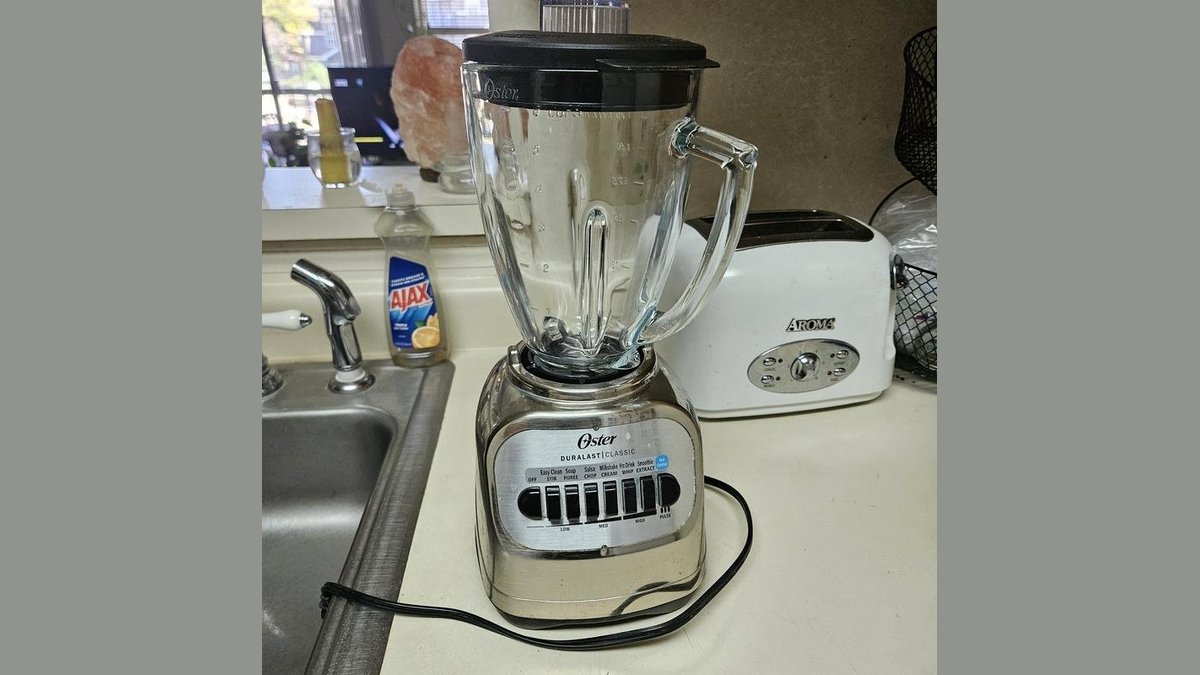
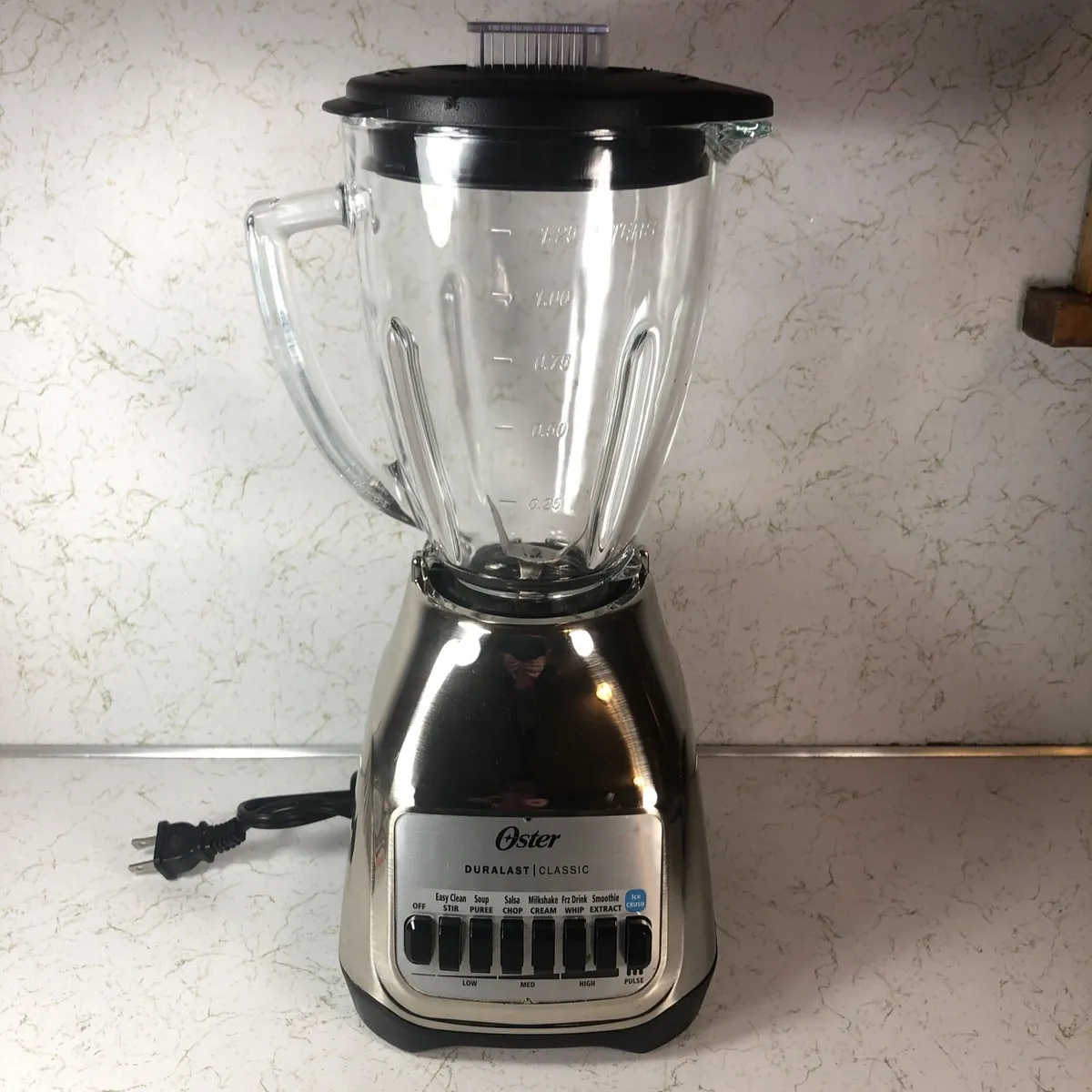
If you’re in the second group, skip to the mistakes table below. If you’re in the third, know this: the Duralast Classic is a mid-range countertop blender with a 12-speed dial and a 5-cup glass jar on most versions. Check your own box or the sticker under the base, because Oster has sold several versions under this name.
This page assumes you have the blender in front of you and the manual nearby. It doesn’t cover repair. Anything involving the motor housing, the blade assembly inside the base, or the power cord is a technician’s job, not yours.
What decides how well it blends
Four things move the result more than the recipe does. Jar load is first, and it’s the one people get wrong most. A blender needs room for food to move. Fill past the top line and the blades can’t pull the food down.
Speed comes second. The dial runs 1 to 12, but higher isn’t better for everything. Speed 12 is for the toughest jobs, like ice and frozen fruit, once the pieces have broken down. Speeds 1 to 3 are for nuts, dips and anything you want to keep texture in. Running a thick dip at 12 just heats it.
Liquid ratio is third. Most blends need at least a splash of liquid to start the vortex. If the blades spin without moving the food, add liquid one tablespoon at a time, not a cup.
Food temperature is fourth. Hot liquid in a sealed blender jar builds pressure and can blow the lid off. Let soup cool to warm before blending, and vent the lid if your model has a vent cap. Check your manual for what your specific jar allows.
Step-by-step: blending with the Oster Duralast Classic
Set the base on a flat, dry counter. Leave about 4 inches of space above it so air can move. The feet should sit flat with no wobble. If it rocks, move it — a walking blender is a tipped blender.
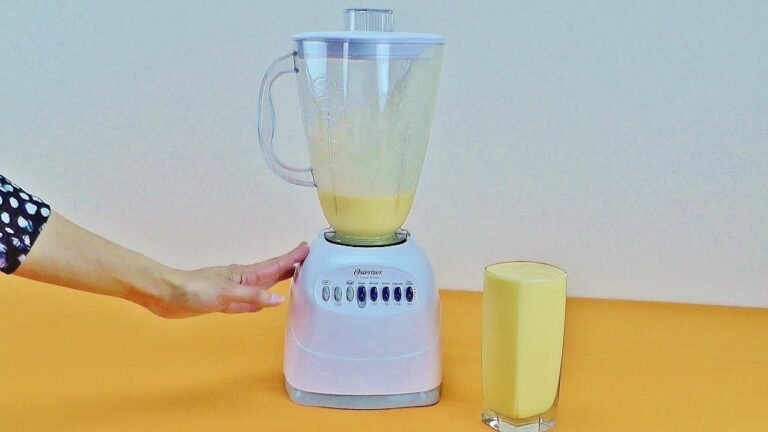
Add liquid first, then soft food, then hard food, then ice on top. For a two-cup smoothie, that’s about 1 cup of liquid, then fruit, then ice. This order keeps food moving into the blades instead of leaving an air pocket that makes a loud grinding sound with nothing moving.
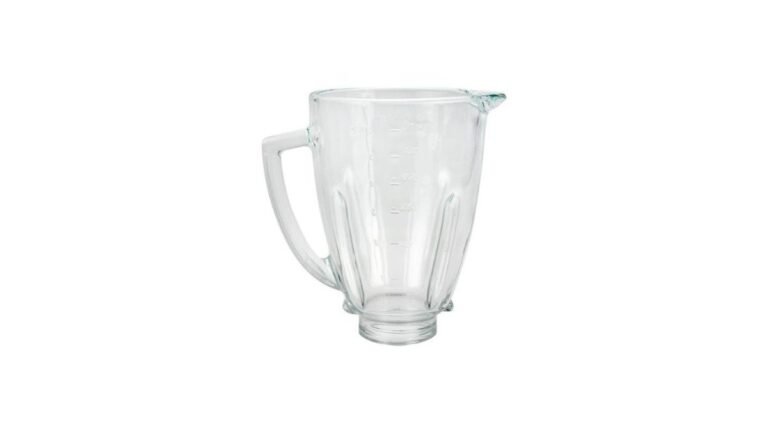
Fill no higher than the top marked line on the jar. That’s usually 5 cups on the glass jar. If your recipe is bigger, blend it in two batches. Overfilling is the number one cause of leaks.
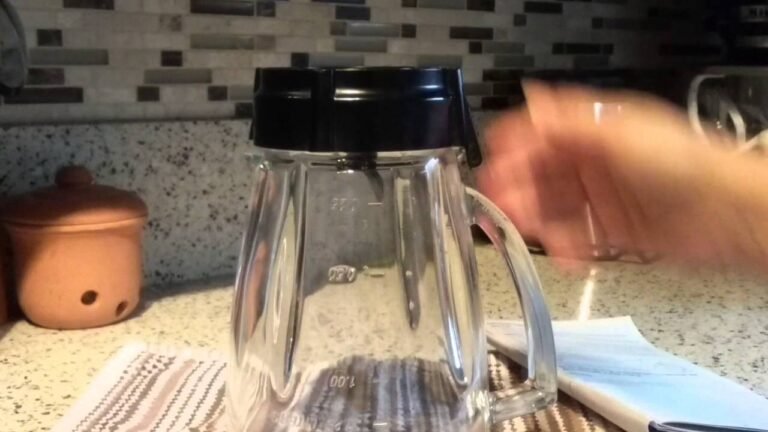
Seat the lid and press it down until it clicks or seats fully. The filler cap fits into the center opening of the lid. If the lid lifts at all when you press it, it’s not on right.
Set the dial to the speed your food needs. Ice and frozen fruit: pulse at 3 or 4 until the pieces break down, then raise the dial. Nuts and dips: 1 to 3. Soups and sauces: 4 to 6. Smoothies with fresh fruit: 6 to 8.
Run in pulses first, then continuous. Pulse 3 to 5 times, one second each, to break up the top layer. Then hold the speed for 30 to 60 seconds. Stop and scrape down the sides with a spatula — with the blender off and unplugged.
Check the texture, don’t trust the clock. Stop when the mixture moves as one mass with no chunks. If you see whole pieces stuck to the jar wall, stop, unplug, scrape, and pulse again.
Turn the dial to Off and unplug before you touch the blades. Wait for the blades to fully stop. This is the step people skip and it’s the one that cuts fingers.
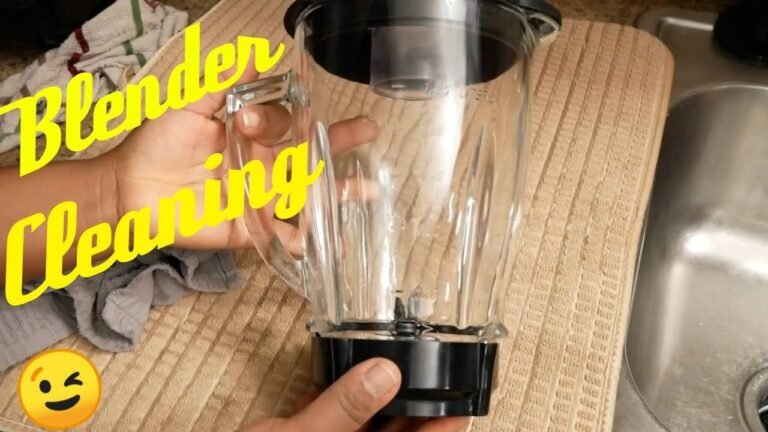
Twist the jar off the base and wash it. Most Duralast Classic jars and lids are top-rack dishwasher safe — check your manual, because it varies by version. The base gets wiped with a damp cloth only.
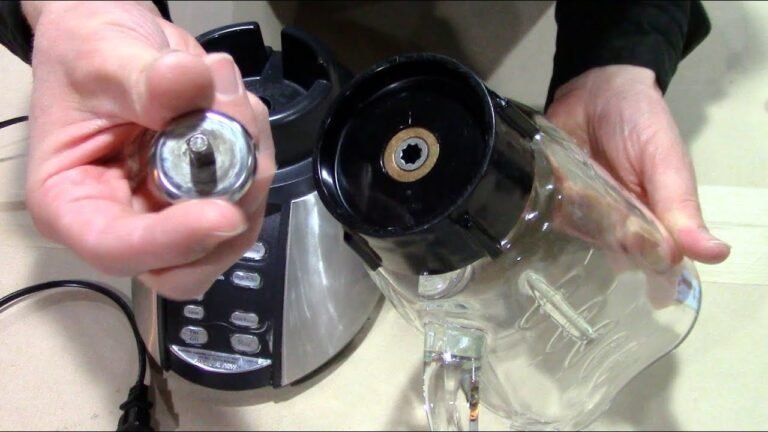
Dry the base of the jar before you set it back. Water between the jar and the base can rust the coupling over time.
The judgement call is knowing when to stop pulsing and let it run. Pulsing too long leaves chunks. Running too long heats the food and wears the motor. If the mixture is moving smoothly and you hear a steady hum, let it finish.
What changes with what you’re blending
The dial number is a starting point, not a rule. What you’re blending decides the rest.
| What you’re blending | Speed and method | Time it takes | What to watch for |
|---|---|---|---|
| Ice cubes | Speed 12, pulse 5 times | 20-40 seconds | Stop when no chunks remain |
| Frozen fruit smoothie | Speed 8-12, pulse then run | 45-90 seconds | Add liquid if it stalls |
| Fresh fruit smoothie | Speed 6-8, run steady | 30-60 seconds | Don’t overfill past the line |
| Nut butter | Speed 1-3, scrape often | 3-5 minutes | Motor may feel warm |
| Soup (cooled) | Speed 4-6, in batches | 30-60 seconds | Never blend hot liquid sealed |
| Baby food | Speed 4-6, run steady | 30-45 seconds | Check for lumps before serving |
| Dips and hummus | Speed 1-3, pulse and scrape | 1-2 minutes | Add liquid one tablespoon at a time |
If your model’s manual lists different speeds, follow the manual. Oster has changed the speed guide between versions of this blender.
What experienced users do differently
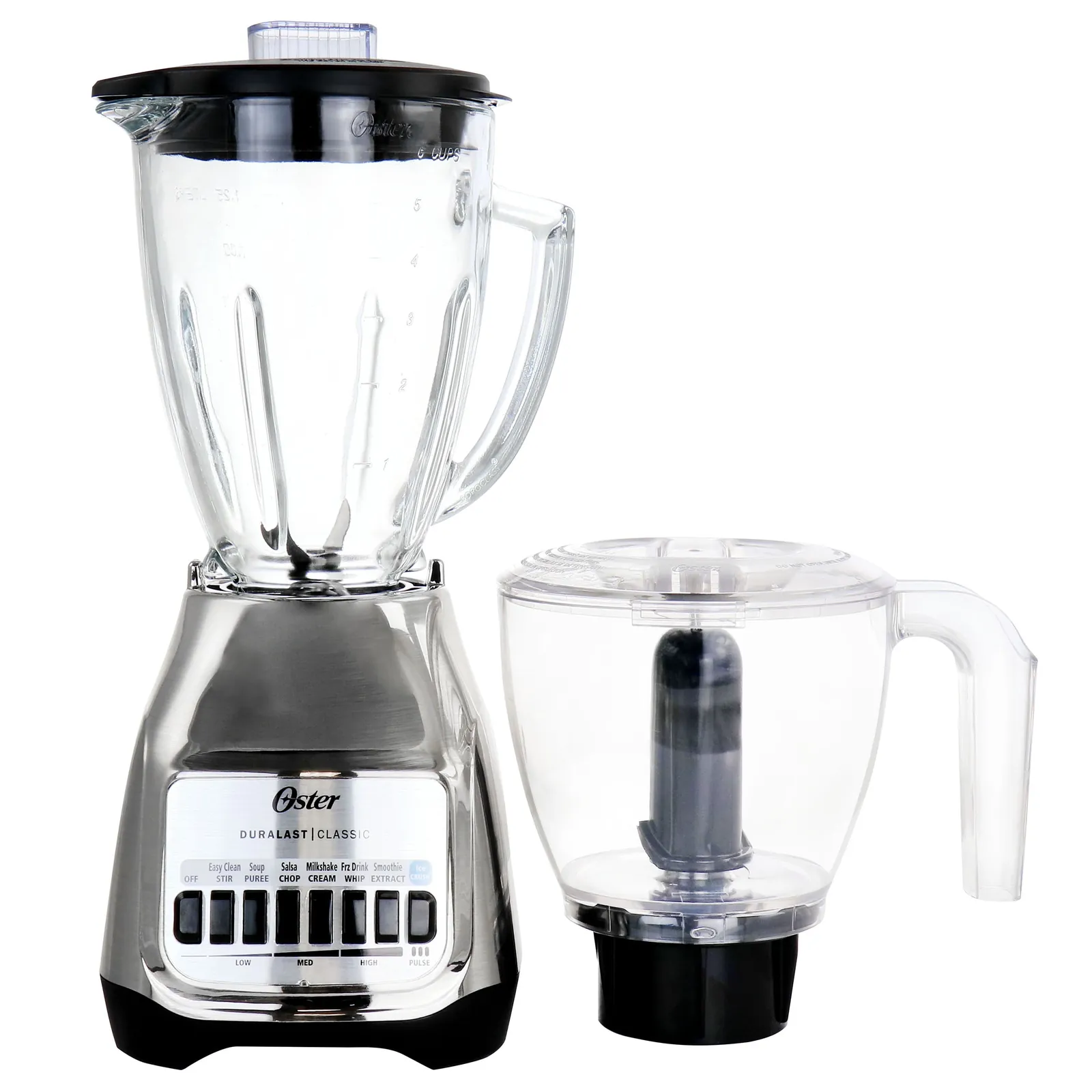
They load the jar in layers, not all at once
The order matters more than the recipe. Liquid on the bottom lets the blades create a vortex that pulls food down. Ice and frozen fruit on top get pulled into that vortex instead of sitting in a dry pocket.
Experienced users also leave headroom. A jar filled well below the top line blends faster and smoother than one filled to the line. If a recipe calls for a full jar, they blend two half batches.
They stop before the motor complains
A burning smell or a hot base means the motor is working too hard. Stop, unplug, and let it cool for 10 to 15 minutes. Then blend a smaller batch. Running through the smell is how motors die.
They also scrape down between pulses instead of running longer. A spatula with the blender off clears the jar wall faster than running the motor longer.
What goes wrong, and how to fix it
Most problems with this blender come down to load, liquid, or speed. Here’s what each symptom usually means.
| What you notice | What it usually means | What to do first | How to stop it happening again |
|---|---|---|---|
| Loud grinding, nothing moves | Air pocket around blades | Stop, add liquid 1 tablespoon at a time | Add liquid before ice |
| Chunks left after 2 minutes | Jar too full or speed too low | Blend in smaller batches | Fill well below the top line |
| Liquid leaking from the base | Jar not seated or overfilled | Empty, reseat the jar, refill less | Check the line before every blend |
| Burning smell from the base | Motor overheating | Stop, unplug, cool 10-15 minutes | Run shorter bursts, smaller loads |
| Lid pops off mid-blend | Pressure from hot food or overfill | Stop, let it cool, vent the lid | Never blend hot liquid sealed |
| Blades spin but food sits still | Too little liquid, too much dry food | Add liquid slowly while pulsing | Layer liquid at the bottom |
| Base feels hot to touch | Long continuous run | Rest 10-15 minutes between uses | Pulse instead of long runs |
If the blender still smells hot or won’t spin after cooling, stop using it. Motor and blade repairs inside the base are technician work — a capacitor can hold a lethal charge even when unplugged. Contact Oster support or a repair shop.
The rules that apply to this blender
Oster publishes a use and care manual with every Duralast Classic. That manual is the authority on your specific model, and it covers jar capacity, dishwasher-safe parts, and maximum run times. Read yours before the first use — the version you own decides the answers.
Two rules apply to every version. Never put the base in water or the dishwasher. Never run the motor continuously for longer than the manual states, because the thermal cutout will shut it off and repeated overheating shortens motor life.
If your blender trips a breaker or sparks, unplug it and stop. That’s an electrical fault, not a blending problem. Call Oster support or a qualified appliance technician. Don’t open the base yourself.
What this really costs you
The blender itself is a one-time cost, and prices change by retailer and season — check Oster’s site or the store listing for today’s number rather than trusting an old figure.
The ongoing costs are smaller but real. Replacement jars and lids are sold separately if yours cracks, and the price depends on whether you have the glass or plastic version. A cracked jar means a new jar, not a new blender.
Time is the bigger cost. Learning your blender’s sweet spots — which speed for which food, how much liquid a smoothie needs — takes a few blends. Expect the first two or three to come out wrong. That’s normal.
Electricity is minimal. A blender runs for seconds or minutes at a time, so it adds little to a power bill. The real risk is running it too hard and shortening its life, which costs you a replacement years earlier than needed.
Keeping it working
Rinse the jar right after each use. Dried smoothie residue sets like cement and takes scrubbing that scratches the plastic or clouds the glass.
Wipe the base with a damp cloth after every session, and dry the coupling area where the jar meets the base. Water sitting there’s what rusts the metal over time.
Check the blade assembly for wobble regularly, since how often this is needed depends on use — the owner’s manual is the authority on servicing. A blade that rattles or spins unevenly needs replacing, and Oster sells the part. Don’t try to tighten or repair it yourself.
The sign it needs attention again is simple: if it takes longer to blend the same recipe than it used to, something’s worn — usually the blade or the jar seal. Replace the part rather than pushing the motor harder.
When this isn’t the right blender for the job
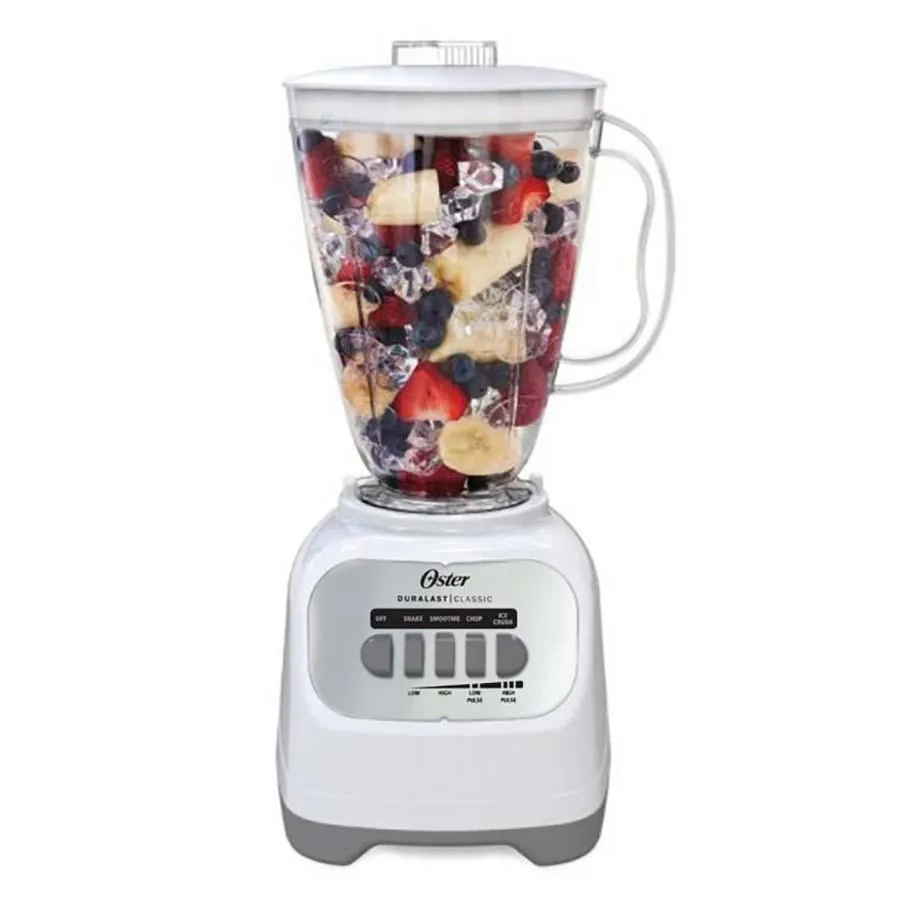
This blender handles smoothies, soups, dips, and crushed ice. It’s not the right tool for everything.
If you need to blend more than 5 cups at once, a larger jar or a different blender is the answer. Running two batches works but takes twice the time.
If you’re blending hot soup straight off the stove, don’t. Let it cool first, or use an immersion blender, which is designed for hot liquid in the pot.
If you need to crush ice daily in large amounts, a blender built for that will last longer. The Duralast Classic can crush ice, but it’s not a commercial machine.
And if your blender has an electrical fault, stop. Repairs inside the base are technician work. A capacitor can hold a lethal charge even when unplugged — call Oster support or a repair shop.
Frequently asked questions
How long does an Oster Duralast Classic blender take to blend a smoothie?
About 45 to 90 seconds for a frozen fruit smoothie at speed 8 to 12, and 30 to 60 seconds for fresh fruit at speed 6 to 8. That assumes a 2-cup batch with about 1 cup of liquid. Bigger batches take longer, so blend in two rounds.
Can you put ice in an Oster Duralast Classic blender?
Yes. Use speed 12 and pulse 5 times first, then run steady for 20 to 40 seconds. Add a splash of liquid so the ice has something to move through. Stop when no chunks remain.
Why is my Oster blender not blending?
The most common cause is too little liquid, which creates an air pocket around the blades. Stop the blender, add liquid one tablespoon at a time, and pulse. If it still won’t spin, the motor may have tripped its thermal cutout — unplug it and wait 10 to 15 minutes.
Is it safe to blend hot soup in this blender?
No, not while it’s sealed and hot. Hot liquid builds pressure in a closed jar and can blow the lid off. Let soup cool to warm first, fill only halfway, and vent the lid if your model has a vent cap.
How often should you clean an Oster Duralast Classic blender?
Rinse the jar after every use, and wash it fully once a day if you blend daily. Wipe the base with a damp cloth after each session. Check your manual for whether your jar and lid are top-rack dishwasher safe.
What happens if you overfill the blender?
Liquid leaks from the base, the blades can’t move the food, and the motor works harder than it should. Fill no higher than the top marked line, usually 5 cups on the glass jar. For bigger recipes, blend in two batches.
Does the Oster Duralast Classic crush nuts?
Yes, at speeds 1 to 3, in short pulses. Nuts need scraping down every few pulses because they stick to the jar wall. Making nut butter takes 3 to 5 minutes and the motor may feel warm — stop and cool it if it does.
Does it matter which speed you use?
Yes, more than most people think. Speeds 1 to 3 are for nuts and dips. Speeds 4 to 6 are for soups and sauces. Running a thick dip at 12 heats it instead of blending it.
Start with one smoothie
Make one simple smoothie first: 1 cup of liquid, 1 cup of fruit, half a cup of ice, speed 8, pulse 5 times, then run 45 seconds. You’ll learn your blender’s sound and speed in one batch.
Expect a smooth result with no chunks and a steady hum, not a grind. If you hear grinding, add liquid. If you smell burning or the base stays hot after 15 minutes of rest, stop and call Oster support or a repair shop.
Keep the first batch small on purpose. Overfilling is the most common way people stall a new blender, and a stalled motor is what sends machines in for repair. One cup of fruit leaves room for the blades to pull everything down.
Frozen fruit needs more liquid than fresh. If the blades spin but nothing moves, add two tablespoons of liquid and pulse again. If the blades don’t turn at all, you’ve overloaded it — scoop half out and start over.
Run three or four batches like this before you try ice alone or a full pitcher. By then you’ll know the sound that means it’s working and the one that means stop.