How To Crush Ice In An Oster Blender
You can crush ice in an Oster blender by filling it about one-third full with ice cubes, adding just enough water to reach the level of the ice, and pulsing in short bursts of 1-2 seconds. Stop and shake the jar every few pulses. Hard, whole cubes in a dry jar are what stall the blades.
Three things change that answer. Your jar type decides whether the blades reach the ice at all. Your model’s wattage decides how long each burst can run. And your ice shape decides how fast it breaks down — small cubes and crescent shapes crush far quicker than big blocks.
Which Oster owner this page is for
The reader who types this title usually falls into one of three groups, and they don’t need the same thing.
The first owns a standard Oster countertop blender — a 5-cup or 6-cup glass jar, somewhere between 450 and 700 watts. They’ve tried ice once, heard the blades spin without biting, and stopped. They need the pulse method and the water trick, nothing more.
The second owns an Oster with a “ice crush” button on the dial. They’ve pressed it and gotten snow on the bottom and whole cubes on top. They need to know that button works best with small amounts, not a packed jar.
The third is working with a personal-size Oster or a smoothie-specific model. These jars are narrow, and a full load jams fast.
This page serves the first two readers best. If you own a personal blender with a 250-watt motor, or an Oster that only has one speed and no pulse, read your manual’s own ice section instead — those machines often say plainly that they aren’t built for it.
The assumption here is simple: you have a full-size Oster with a pulse or ice-crush setting, and you’re using normal freezer cubes.
What decides whether the ice breaks or jams
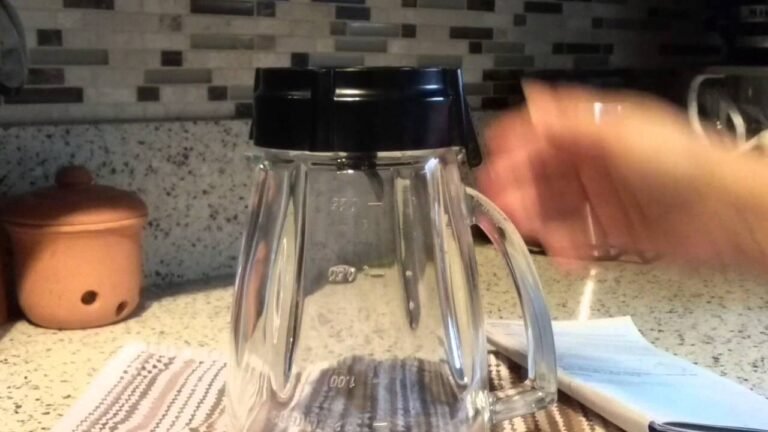
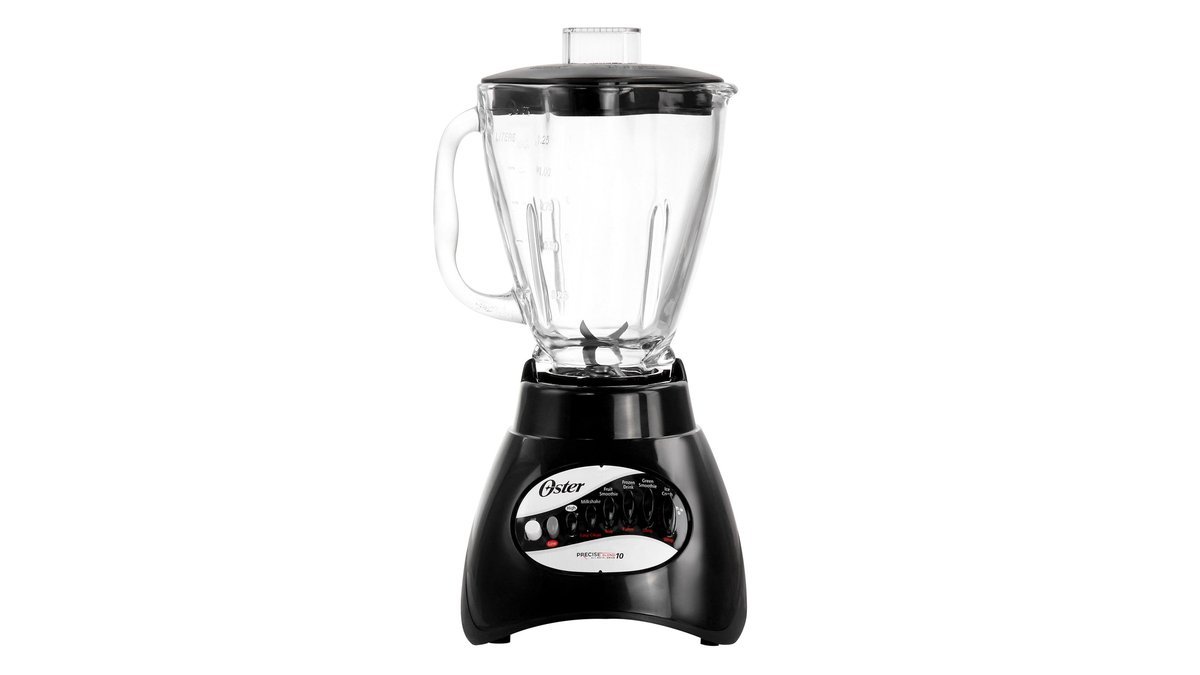
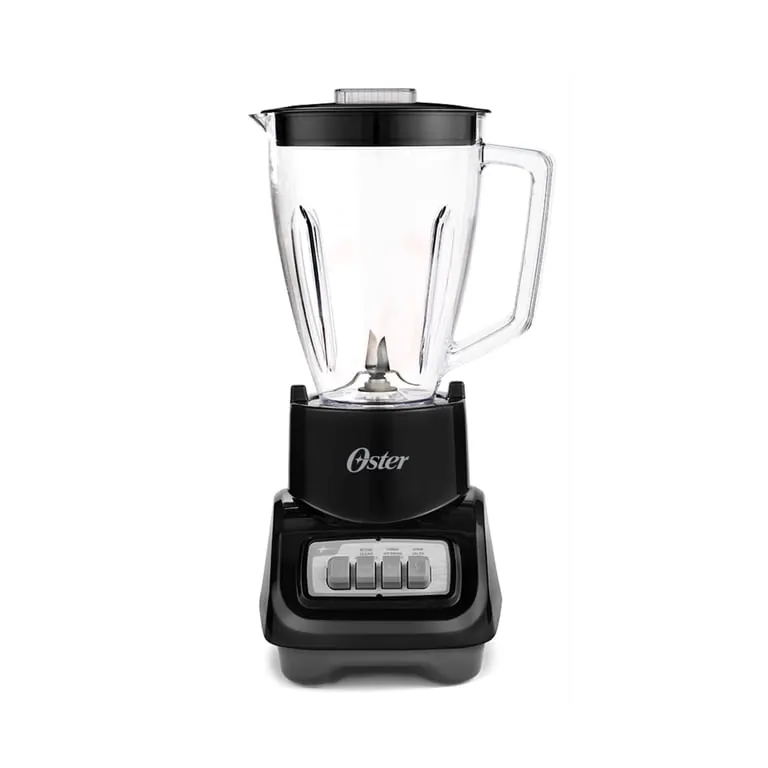
Blade count and jar shape decide more than wattage. Oster’s standard 6-point blade sits low in a wide glass jar. Ice at the top of a full jar never touches it. Fill to one-third, not to the top, and the blades find the cubes. Check your own jar: if you can see ice sitting above the blade assembly when the jar is upright, it’s too full.
Water is the difference between crushing and dust. A dry jar lets cubes bounce off the blades. About 1/4 cup of water in a 5-cup jar gives the ice something to move through, so the blades catch it. Too much water and you get a slurry with floating chunks.
Wattage sets how long you can hold the button. A 450-watt Oster needs short taps — 1 to 2 seconds. A 700-watt model handles 3-second bursts. Holding either one down for 10 seconds heats the motor and doesn’t crush any faster. Your motor’s rating is printed on the base or on the label underneath.
Ice shape and temperature change the time. Small crescent cubes crush in about 15-20 seconds of pulsing. Large square cubes or ice from a deep tray take roughly twice that. Ice straight from a frosty freezer is harder and slower than ice that’s sat out for 2-3 minutes.
The mistake people make most: filling the jar to the top because that’s how much ice they want. That’s the single biggest cause of a stalled blade and a hot motor. Crush in two or three smaller batches instead.
Step-by-step: crushing ice in an Oster blender
Check the lid is locked. Set the jar on the base and twist until it seats. The lid and the clear cap must both be pressed down. If the lid lifts at all when you tug it, stop — a loose lid sends ice across the counter.
Add ice to the one-third mark only. For a standard 5-cup Oster jar, that’s about 1.5 to 2 cups of cubes. Don’t go past it on the first batch.
Pour in 1/4 cup of cold water. For a 6-cup jar, use 1/3 cup. The water should just reach the bottom layer of ice, not cover it.
Press PULSE for 1 second, then release. On models with an ice-crush button, use that instead. You’ll hear the blades bite and the ice shift. If the blades spin free with no change in sound, stop.
Shake the jar side to side for 2 seconds. With the lid still locked, tip the jar gently left and right. This moves whole cubes down toward the blades. Do this every 3-4 pulses.
Repeat pulse-and-shake for 15-20 seconds total. Small cubes reach a snow texture in that window. Large cubes take 30-40 seconds. The sign it’s working: the sound drops from a sharp crack to a steady low grind.
Check the texture, then decide. Open the lid and look. If you want finer ice, add 1 tablespoon of water and pulse 3 more times. If it’s already right, stop — extra pulsing just melts it.
Empty the jar before the next batch. Tip the crushed ice into a bowl. Don’t crush a second batch on top of the first; the bottom layer turns to water.
Let the motor rest 1 minute between batches. Two batches back to back is fine. Four in a row without a pause is how motors get hot.
Wash the jar and blade by hand. Most Oster glass jars and blade assemblies are top-rack dishwasher safe, but check your model’s manual — some bases and blade seals aren’t.
The judgement call that separates a good result from a poor one is knowing when to stop pulsing. Crushed ice goes from perfect to puddle in about 5 extra seconds. Watch the texture through the jar wall, not the clock.
One limit worth naming: never push ice down with a spoon, spatula or your hand while the blender is plugged in. If the blades are stuck, unplug the base first, then use a spatula. And don’t try to service the blade assembly or the base yourself — those parts are for a repair technician, not a kitchen job.
Crushing ice in different Oster setups
One lead sentence, then the table. Match your situation to the row, and follow that row’s method rather than the general one above.
| Your situation | What to do | What it takes | What to watch for |
|---|---|---|---|
| Standard jar, pulse button | 1/4 cup water, 1-second pulses | 20-30 seconds | Don’t overfill past one-third |
| Jar with ice-crush setting | Small loads, press and hold 2-3 seconds | 15-25 seconds | Setting stalls on packed jars |
| Low-wattage model (under 500W) | Tiny batches, 1-second taps | 40-60 seconds | Motor smell means stop now |
| No pulse, one speed only | Short on-off taps of the power button | 30-45 seconds | Hard on the switch over time |
| Large square cubes | Let sit 2-3 minutes first | 40-60 seconds | Blades skip off flat faces |
| Making frozen drinks | Crush ice first, then add liquid | 30 seconds plus mixing | Adding all at once jams it |
| Crushing for a crowd | Two or three separate batches | 2-3 minutes total | Rest motor 1 minute between |
What experienced Oster owners do differently
They prep the ice, not the blender
That’s the whole trick — no special equipment, no extra step beyond waiting.
They also break up ice sheets before they go in. If your trays make a solid block, drop the tray on the counter once to crack it into cubes. Whole blocks sit on the blades and spin.
They work in small loads and check often
A 5-cup jar gets about 2 cups of ice, never more. Experienced users crush in two batches rather than one big one, because the second batch takes 20 seconds and the jammed single batch takes five minutes of unplugging and digging.
They also check texture through the jar wall instead of opening the lid. Every lid opening loses cold air and adds a few seconds of melting.
What they deliberately leave alone: the blade assembly and the base. If ice won’t crush after two full attempts with the right amount and water, the problem isn’t technique — it’s the machine, and that’s a repair question.
When ice won’t crush: what you’re seeing and what to do
Match what you notice to the likely cause, then take the first action listed.
| What you notice | What it usually means | What to do first | How to stop it happening again |
|---|---|---|---|
| Blades spin, ice doesn’t move | Jar is too full | Empty half, add 1/4 cup water | Fill only to one-third |
| Loud cracking, no progress | Cubes are too large | Pulse 3 times, shake, repeat | Crack ice sheets before loading |
| Motor smells hot | Running too long per burst | Stop, unplug, wait 10 minutes | Keep bursts under 3 seconds |
| Ice turns to slush fast | Too much water added | Pour off liquid, pulse briefly | Start with 1/4 cup only |
| Ice sticks to jar walls | Moisture freezing to cold glass | Tap the jar side with your palm | |
| Nothing happens at all | Lid not locked or not plugged in | Check lid seat and outlet | Seat lid fully before pressing |
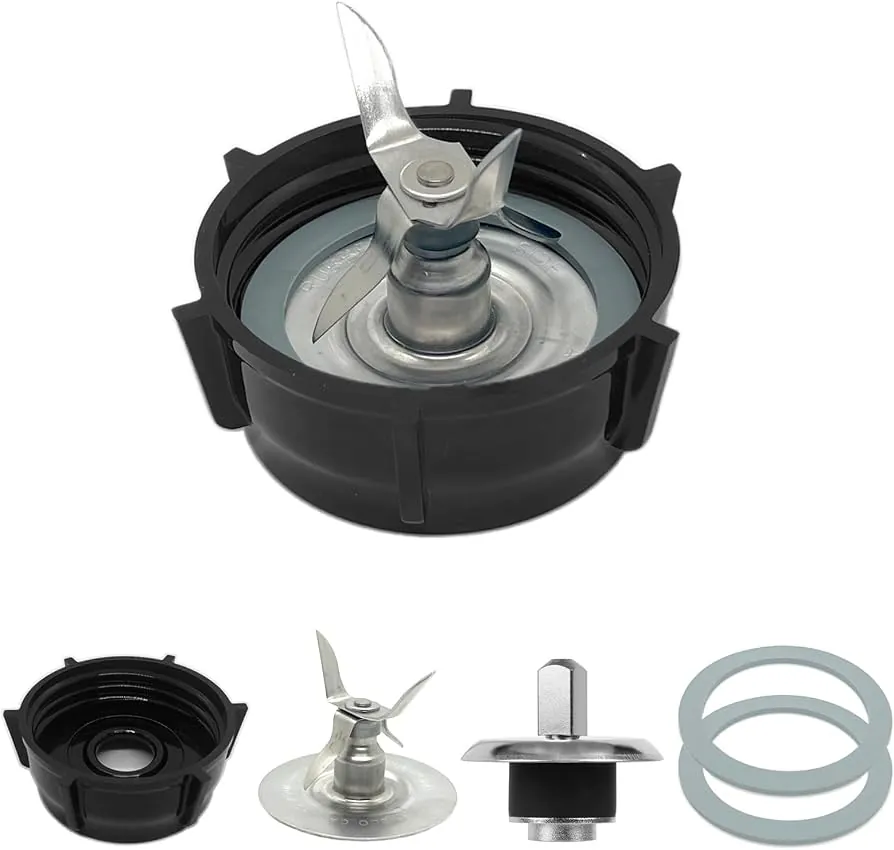
| Grinding metal sound | Blade assembly is loose or worn | Stop, unplug, check the blade nut | Replace worn blade assembly |
The rules and limits that apply here
Blender ice crushing isn’t regulated the way food safety is, but a few real limits decide what’s allowed. Your Oster’s manual is the authority on your specific model — it states the maximum run time and whether ice is covered at all. Some Oster manuals list a maximum continuous run of about 1 minute, with a rest period after. Check your own booklet or the Oster support page for your model number, because this varies by motor.
Food safety rules from the USDA apply to what you do with the ice afterwards. Ice that’s been crushed and left sitting at room temperature melts, and meltwater left in a jar grows bacteria. If you’re crushing ice for drinks served later, keep it in the freezer until you use it.
One hard stop: never open the blender base, and never touch the blade assembly while the unit is plugged in. A blender’s motor and wiring are technician work. If your machine sparks, smokes or trips the breaker, unplug it and take it to an authorized Oster service point or replace it.
What crushing ice actually costs you
The money cost is close to zero if your Oster already crushes ice — a few cents of electricity per batch. The real cost shows up when it doesn’t, and you start replacing things.
Blade assemblies for Oster blenders are typically inexpensive relative to the alternative, depending on the model and where you buy. Check Oster’s own parts page or your retailer for today’s price, because it moves. If your motor is the problem, repair often costs more than a new base, and that’s the point where most people replace the machine.
Time is the other cost. Done right, a batch of crushed ice takes 20-40 seconds of pulsing plus a minute of motor rest between batches. Done wrong — jar packed full, no water, long holds on the button — it takes several minutes of stopping, unplugging and digging ice out with a spoon.
The thing that moves the cost up most is running a low-wattage Oster like a high-wattage one. Short bursts on a weak motor take longer but keep it alive. Long holds on a weak motor burn it out, and that’s a new blender, not a new blade.
Keeping your Oster crushing ice for years
Wash the jar and blade assembly by hand after every ice batch. Meltwater left in the jar leaves mineral film on the blades, so wash it out after each batch. Warm water, a drop of dish soap, and a soft brush around the blade base is enough.
Check the blade assembly’s tightness based on how much you use it, with your owner’s manual as the authority. A blade nut that’s worked loose spins without biting. If you can wiggle the blade by hand with the jar off the base, it needs tightening or replacing.
The sign your Oster needs attention again is a change in sound. A healthy crush is a steady low grind. A high whine with no ice movement means the blades aren’t catching, and that’s your cue to check the load, the water and the blade tightness before you blame the motor.
Store the jar upside down with the lid off so it dries fully. Trapped moisture and food residue in the lid seal is what causes that sour smell people notice weeks later.
When an Oster blender is the wrong tool
If you’re crushing ice for a party — 10 pounds or more — a countertop Oster is the wrong machine. You’d be running 8 to 10 batches with rest periods between each. A countertop ice crusher or a bag of pre-crushed ice from a store handles that job in minutes.
If your Oster is a personal-size model with a 250-watt motor and no pulse setting, this page’s method won’t save it. Those machines aren’t built for ice, and forcing it voids the warranty. Use a manual ice crusher or buy crushed ice instead.
If your blender sparks, smokes, or trips the breaker when you press the button, stop using it. That’s an electrical fault, not a technique problem. Unplug it and take it to an authorized service point, or replace it — don’t open the base yourself, because a capacitor inside can hold a dangerous charge even when unplugged.
Related guides
- Can a Nutribullet Blender Crush Ice? Yes, With the Right Method
- 10 Best Ninja Blender For Crushing Ice Picks and Reviews
- How To Crush Ice In A Vitamix Blender: The Pulse Method
Frequently asked questions
Can you crush ice in an Oster blender without water?
Yes, but it’s slower and rougher on the blades. Dry ice cubes bounce instead of feeding into the blades. A small splash — about 1/4 cup in a 5-cup jar — gives the ice something to move through. Without it, expect 40-60 seconds of pulsing instead of 20-30, and more jar shaking.
Why does my Oster blender just spin and not crush the ice?
The jar is too full, so the ice sits above the blades. Oster’s standard blade sits low in the jar. Fill only to the one-third mark — about 2 cups in a 5-cup jar — and add 1/4 cup of water. If it still spins free, the blade assembly may be loose.
How long does it take to crush ice in an Oster blender?
About 20-30 seconds of pulsing for small cubes in a standard jar, or 40-60 seconds for large square cubes. Add 1 minute of motor rest between batches. Low-wattage models under 500 watts take roughly twice as long per batch, so keep the bursts short.
Is it safe to put whole ice cubes in an Oster blender?
It’s safe for the user if the lid is locked, but hard on the machine if you overload it. Oster’s own manuals cover ice for most full-size models. Whole cubes in a jar filled past one-third are what stall blades and heat motors. Small loads with water are the safe pattern.
What happens if I run the Oster blender too long on ice?
The motor overheats and you’ll smell hot plastic or metal. Stop, unplug it, and wait at least 10 minutes before the next try. Repeated overheating shortens motor life. Keep each burst to 1-3 seconds depending on your wattage, and rest the motor 1 minute between batches.
Does the ice crush button on an Oster work differently?
It runs a programmed pulse pattern rather than continuous power, which is easier on the motor. It still stalls on a packed jar. Use it with small loads — about 2 cups in a standard jar — and shake the jar every few seconds. Treat it as a pulse button, not a magic setting.
Can I crush ice in an Oster personal blender?
Only if your model’s manual lists ice. Most personal Oster blenders have 250-watt motors and no pulse setting, and ice voids the warranty on those units. Check your manual’s ice section first. If it isn’t listed, use a manual ice crusher or buy pre-crushed ice.
How much ice can an Oster blender crush at once?
About 2 cups in a standard 5-cup jar, or 1.5 cups if your motor is under 500 watts. That’s the one-third fill line. More than that and the top cubes never reach the blades. For larger amounts, crush in separate batches with 1 minute of rest between them.
What to do next with your Oster
Start with one small batch: 2 cups of ice, 1/4 cup of water, 1-second pulses, shake every few. You should have snow-textured ice in about 20-30 seconds, and the sound should drop to a steady grind. If two proper attempts still leave whole cubes and a hot motor smell, stop — that’s a machine problem, and it’s time for an authorized Oster service point or a new blender.